A few extra miles from every litre may not sound dramatic, but when fuel is one of your biggest weekly motoring costs, it soon adds up. Better fuel economy is not about crawling along or avoiding every journey. It comes from choosing the right vehicle, keeping it in good condition and cutting out the small habits that quietly waste fuel.
For car and van drivers, the best savings are usually the simplest ones. A properly inflated tyre, a smoother motorway journey or an unnecessary load removed from the boot can all make a genuine difference. Here are practical ways to make each tank go further without making daily driving a chore.
1. Check your tyre pressures regularly
Tyres that are below their recommended pressure create more rolling resistance. In plain terms, your engine has to work harder to move the vehicle, which means it uses more fuel. Under-inflation also causes tyres to wear faster and can affect how the car or van handles.
Check pressures at least once a month, and always before a long trip. Do it when the tyres are cold and use the pressure figures listed in your handbook, on the driver’s door frame or behind the fuel flap. If you regularly carry passengers, tools or heavy stock, use the manufacturer’s recommended loaded setting where applicable.
Do not over-inflate tyres in an attempt to save fuel. It can reduce grip, make the ride less comfortable and lead to uneven tyre wear. The right pressure is the money-saving option.
2. Drive smoothly, not slowly
Hard acceleration, late braking and sudden bursts of speed burn more fuel than most drivers realise. Looking further ahead gives you time to ease off the accelerator when traffic is slowing, approach junctions more gradually and keep the vehicle moving where it is safe to do so.
Aim to build speed progressively and change up through the gears without labouring the engine. In a manual vehicle, staying in a lower gear for longer than needed raises revs and uses more fuel. In an automatic, gentle throttle inputs usually help the gearbox select higher gears sooner.
This does not mean driving so slowly that you hold up traffic. Drive to the road, weather and speed limit, while avoiding unnecessary changes in pace. Smooth driving is safer, less stressful and often cheaper.
3. Keep your speed sensible
Fuel use rises sharply at higher speeds because air resistance increases. On a long motorway journey, reducing your cruising speed slightly can have a noticeable effect on how far a tank lasts, especially in a larger vehicle or loaded van.
The saving depends on the vehicle, the route and the conditions. A modern, efficient car may still use considerably more fuel at 70mph than it does at 60mph, while a high-roof van is particularly affected by wind resistance. You do not need to drive below the flow of traffic, but setting a sensible speed and using cruise control on clear, level roads can help prevent fuel-hungry fluctuations.
Cruise control is not always the best choice on steep, rolling roads, where it may accelerate hard uphill to maintain speed. In those conditions, a lighter touch on the accelerator can be more economical.
4. Remove weight and reduce drag
Your vehicle is not a storage unit. Every unnecessary item in the boot, cabin or van load area needs fuel to carry it around. Clearing out old tools, sports equipment, boxes and other forgotten weight is a quick job that costs nothing.
Roof bars, roof boxes and bike carriers also create drag, particularly at motorway speeds. If you only need them for holidays or occasional trips, take them off when they are not in use. The difference may be modest on short local journeys, but it can be worthwhile over thousands of miles.
For van drivers, loading matters even more. Plan jobs so you are not carrying materials or equipment all week that you only need on Friday. Secure every load properly too. Loose items are dangerous as well as inefficient.
5. Plan journeys before you set off
The shortest route is not always the cheapest route. A route that avoids stop-start congestion, steep hills or repeated detours can use less fuel even if it is a few miles longer. Checking traffic before you leave may help you avoid sitting with the engine running in a queue.
Where practical, combine errands into one journey. A cold engine uses more fuel, so several separate short trips can cost more than one planned round trip. For local journeys that are easily walkable or cyclable, leaving the car at home saves fuel entirely and reduces wear on the vehicle.
If you use a van for work, group calls by area and keep delivery schedules realistic. Rushing between appointments encourages heavy acceleration and idling, neither of which helps your running costs.
6. Do not idle for longer than necessary
Idling gets you nowhere while using fuel. Modern engines do not normally need several minutes to warm up before driving. Start the vehicle, allow a brief moment to settle if needed, then drive away gently.
If you expect to be stationary for more than a short period, such as waiting for someone or held at a rail crossing, switching off may make sense where it is safe and legal to do so. Many newer vehicles have stop-start systems designed for this purpose. They can feel unfamiliar at first, but they are intended to reduce fuel used in stationary traffic.
In cold weather, avoid leaving the engine running simply to clear frost from the windscreen. Use a scraper and de-icer instead. It is safer, faster in many cases and avoids wasting fuel outside your front door.
7. Stay on top of servicing and repairs
A well-maintained vehicle is more likely to deliver the fuel economy it was designed to achieve. Dirty air filters, worn spark plugs, old engine oil, sticking brakes and engine faults can all increase consumption. A dashboard warning light should not be ignored, particularly if the engine management light appears.
Follow the manufacturer’s service schedule and use the correct grade of oil. If you notice a sudden drop in miles per gallon, rough running, pulling to one side or a burning smell after driving, get the vehicle checked. A small fault can become a costly repair if it is left unresolved.
Wheel alignment is worth checking after hitting a pothole or kerb, or if the steering wheel no longer sits straight. Poor alignment can shorten tyre life and add to rolling resistance.
8. Use air conditioning wisely
Air conditioning takes energy from the engine, so using it can increase fuel use. The impact varies between vehicles and is often less significant on a steady long journey than people assume. Still, there is no need to run it at full power when the cabin is already comfortable.
At low speeds, opening the windows can be a sensible alternative on a mild day. At faster speeds, wide-open windows add aerodynamic drag, so air conditioning may be the better option for comfort and fuel economy. As with most driving decisions, it depends on the journey.
Use the climate controls sensibly, and remember that demisting the windscreen is a safety issue. Clear visibility always comes before marginal fuel savings.
9. Choose the right fuel and vehicle for your mileage
Using the fuel grade specified by your vehicle manufacturer is the sensible starting point. Premium fuel is not guaranteed to improve fuel economy enough to justify its higher price, unless your vehicle specifically requires or benefits from it. Keep an eye on your actual miles per gallon and cost per mile rather than relying on advertising claims.
If you are changing vehicles, be realistic about how you drive. A small petrol car may suit short urban journeys, while a diesel can make financial sense for some high-mileage motorway drivers. Hybrid and electric vehicles can reduce running costs for the right usage pattern, but purchase price, charging access, payload and journey length all matter.
Van buyers should consider payload and load space before chasing the lowest official consumption figure. An underpowered van that is constantly overloaded is unlikely to be economical in real use.
10. Track your fuel spending
Recording fuel purchases gives you a clear view of what your vehicle is costing. Note the litres added, mileage and price paid, then compare results over several tanks rather than judging one journey. This helps you spot changes caused by a fault, a new commute, colder weather or a different driving style.
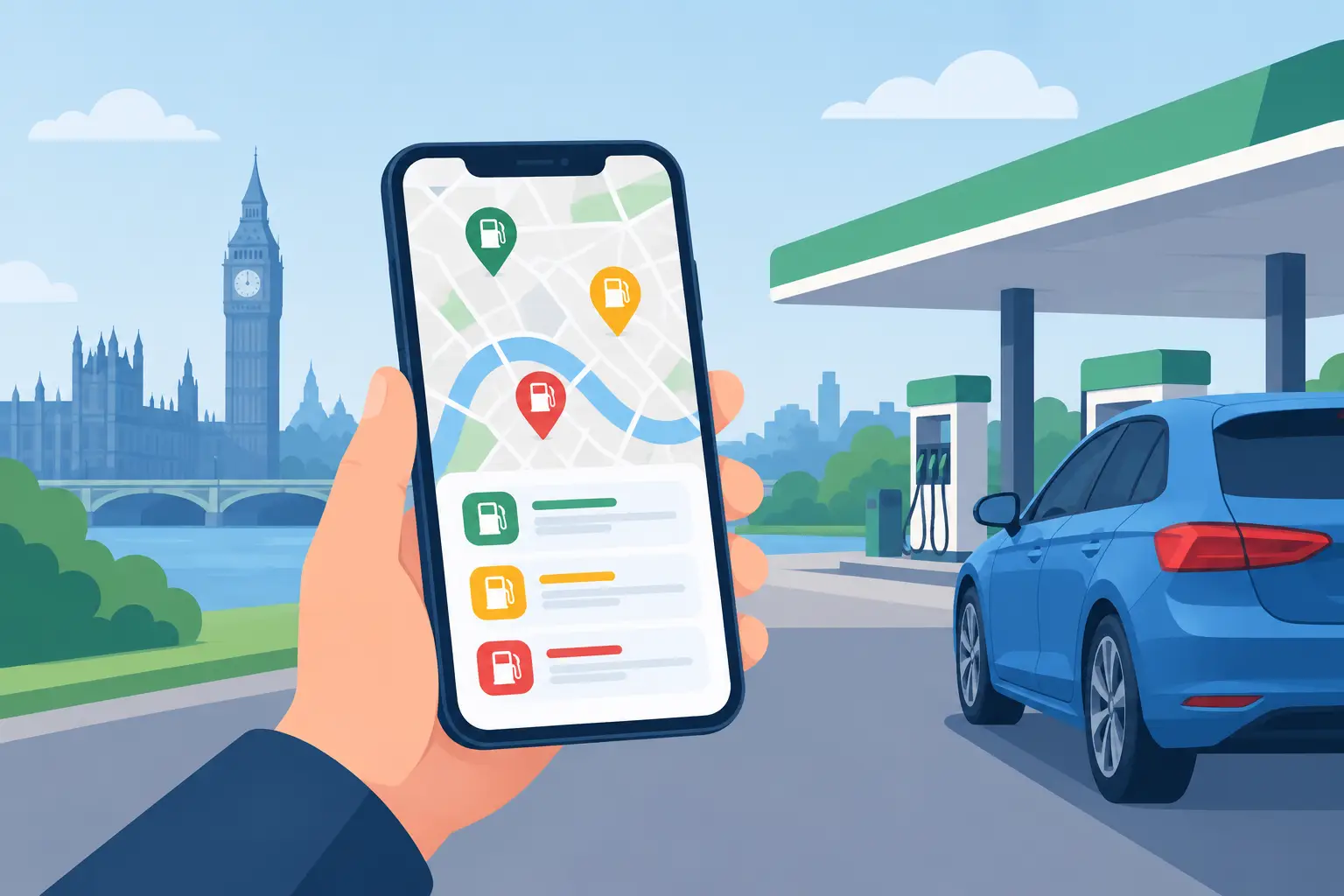
Use local prices to your advantage too. Filling up at the first convenient petrol station can be expensive, particularly near motorways. UKcompare’s fuel-price map can help drivers identify lower-priced fuel nearby, so you can make a better choice before the warning light comes on.
Fuel economy is not about one magic trick. It is the result of small, repeatable decisions that protect your wallet and your vehicle. Start with tyre pressures and smoother driving this week, then watch what happens to your next few fill-ups. Who Compares Wins!