A scrape on a supermarket bollard, a dented door in a shared car park or a bump while reversing can feel minor. But knowing how to report a parking accident properly can protect you from avoidable trouble with the police, the vehicle owner and your insurer. The key is to stop, gather accurate details and report the incident promptly – even if you do not plan to make a claim.
What counts as a parking accident?
A parking accident is any collision that happens while a vehicle is parking, pulling out of a space or moving slowly in a car park, driveway, roadside bay or similar area. It may involve another car, a motorbike, a van, a pedestrian, a wall, a gate, a trolley shelter or street furniture.
Low speed does not mean low consequence. A light impact can crack a bumper mounting, damage parking sensors, leave a crease in a panel or cause an injury that is not immediately obvious. If you hit a stationary vehicle, do not assume the owner will simply accept the damage as a private arrangement. Treat it as a road traffic incident and handle it clearly from the start.
What to do at the scene
First, stop safely. Do not drive away to find a better parking space or wait until you get home to think about it. Check whether anyone is hurt and call 999 if there is a serious injury, immediate danger or an emergency response is needed.
If another driver is present, stay calm and exchange names, addresses, registration numbers and insurance details. You should also take the make, model and colour of the other vehicle, along with the time and exact location. Avoid arguing about who was at fault. A brief factual conversation is far more useful than a heated one, and responsibility can be assessed later by the insurers.
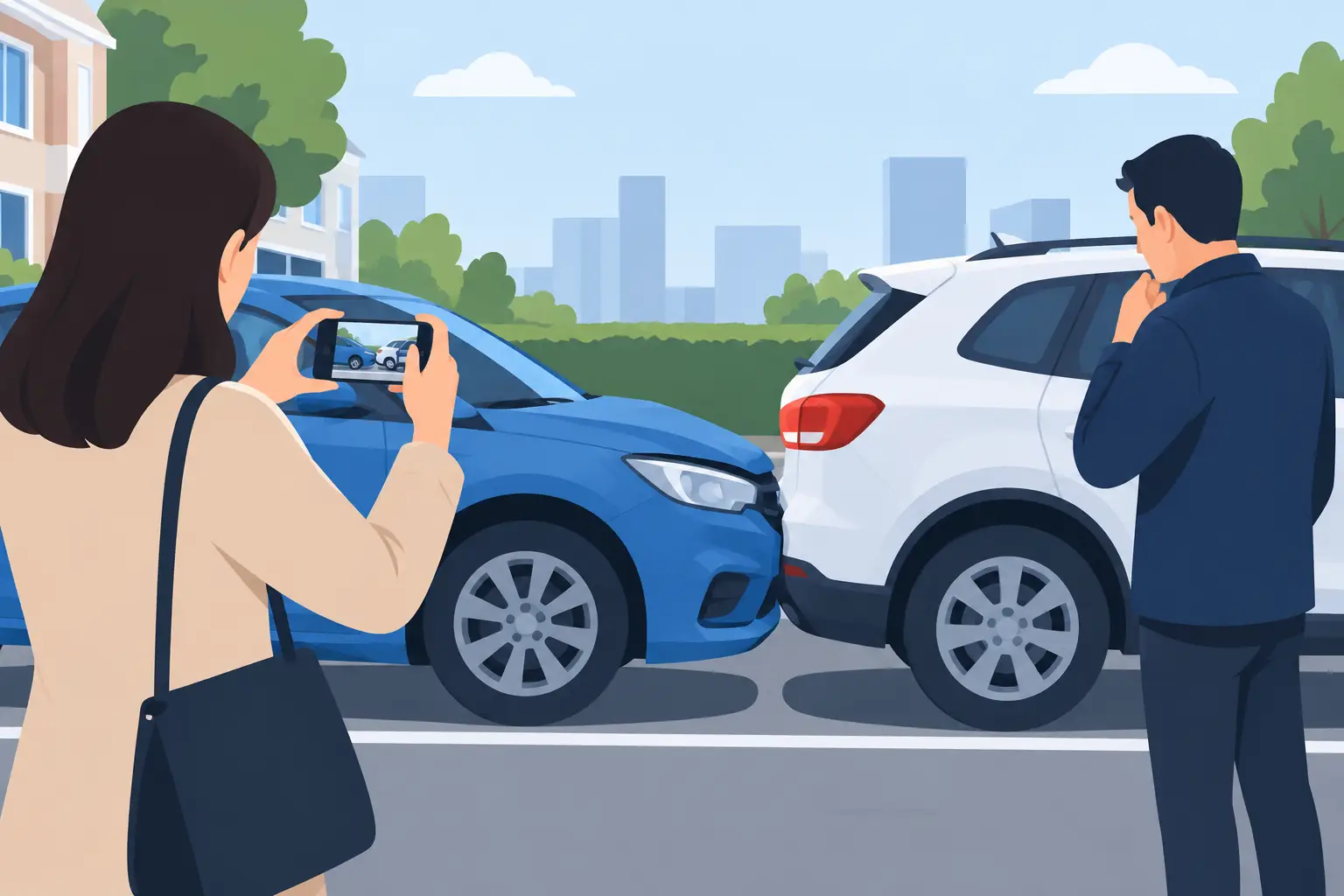
Take photographs before either vehicle is moved, where it is safe to do so. Photograph both vehicles, each area of damage, number plates, bay markings, signs, obstructions and the wider layout of the car park. If there are witnesses, ask for their name and contact number. Some car parks have CCTV, so make a note of any cameras nearby and contact the site operator quickly, as footage may be overwritten.
You should not admit liability at the scene, even if you believe you made a mistake. Saying sorry for the inconvenience is different from agreeing to pay for every repair. Let your insurer review the evidence and policy terms.
If you hit an unattended car
If the owner is not there, you must stop and make a genuine effort to provide your details. Leave a secure written note with your name, address, vehicle registration and a way to contact you. Put it somewhere visible, such as beneath the windscreen wiper, but remember that notes can be lost, damaged by rain or removed.
For that reason, reporting the matter to the police is usually the sensible next step if you cannot exchange details with the owner directly. Under the Road Traffic Act, where damage is caused to another vehicle or property, you must stop and give your details to anyone with reasonable grounds to ask for them. If you cannot do this at the scene, report the collision to the police as soon as reasonably practicable and, in any event, within 24 hours.
Use 101 or your local police force’s online reporting service for a non-emergency report. Keep the incident reference number. Do not use 999 unless there is an emergency, someone is injured or there is an immediate risk to public safety.
A note alone may not be enough if it disappears. Reporting the incident gives you a clear record that you acted responsibly rather than leaving the scene.
How to report a parking accident to your insurer
Tell your insurer as soon as possible, even if the damage seems small, the other driver says they will not claim or you intend to pay for repairs yourself. Most motor policies require you to notify the insurer about an accident or potential claim. This is often called notification only, and it does not always mean you have started a claim.
Have the following ready when you call or report online:
- your policy number and vehicle registration
- the date, time and location of the incident
- the other driver’s contact, vehicle and insurance details, if available
- photographs, witness details and any police reference number
- a factual account of what happened, including road or car park conditions
Keep your description simple. For example: “I was reversing from bay 42 at approximately 3.15pm when my rear bumper made contact with a parked vehicle.” Do not guess at speed, damage costs or blame if you are unsure.
Your insurer may arrange repairs, contact the other party, request further evidence or record the event without progressing a claim. If the other vehicle owner later makes a claim, your early notification helps your insurer respond with the right information.
Do you have to report an accident on private land?
Yes, you should still exchange details and notify your insurer after a collision in a private car park, supermarket car park, workplace or residential development. The fact that the land is private does not make the damage disappear, and insurance obligations still apply.
Police reporting rules can be more complicated on purely private land, but do not rely on that distinction to avoid reporting a collision where you could not exchange details. If you damage an unattended vehicle, a barrier or another person’s property, contact the police on 101 for guidance and keep a record of what you have done.
Car park claims can be less straightforward than they look. Poor markings, blocked views, unclear priority signs, moving vehicles and CCTV can all affect the decision. In some cases, insurers may find both drivers partly responsible. Good photographs and an accurate account matter more than confident assumptions.
Will a parking accident affect your insurance?
It can. A claim where you are held responsible may reduce or remove some or all of your no-claims discount, depending on your policy and whether you have no-claims discount protection. An incident recorded as notification only may also need to be declared when you renew or seek new cover, depending on the question asked by the insurer.
The impact on your premium depends on the circumstances: the value of the claim, fault decision, your claims history, vehicle, postcode and insurer’s pricing approach all play a part. That is why it pays to be accurate when comparing cover. A cheaper policy may carry a higher excess or offer a different level of claims support, so compare the protection as well as the price.
If you are considering settling privately, speak to your insurer first. A private agreement can appear quicker, especially for a small scuff, but repair costs can rise once a garage finds hidden damage. The other party could also change their mind and claim later. Never promise payment or hand over money without a written estimate and clear agreement, and remember your policy may still require notification.
If someone hits your parked car and leaves
Return to your car and photograph the damage and its position before moving it. Look for a note, then ask nearby businesses, staff or car park attendants whether CCTV may have captured the incident. Record the time window as closely as you can.
Report the damage to the police through 101 or online if the other driver failed to stop or provide details. Then notify your insurer. If you have the other vehicle’s registration, provide it, but do not attempt to confront the driver yourself. Your insurer and the police can use the available evidence to investigate.
Keep records until the matter is closed
Save photographs, messages, repair estimates, police references and correspondence with your insurer in one place. Write down your own account while the event is fresh, including weather, visibility, bay markings and who was present. Small details are easy to forget after a few days.
A parking accident is frustrating, but a prompt, factual report puts you in the strongest position. Once the immediate issue is dealt with, compare car insurance carefully at renewal: who compares wins when price, excess and the cover you need are considered together.