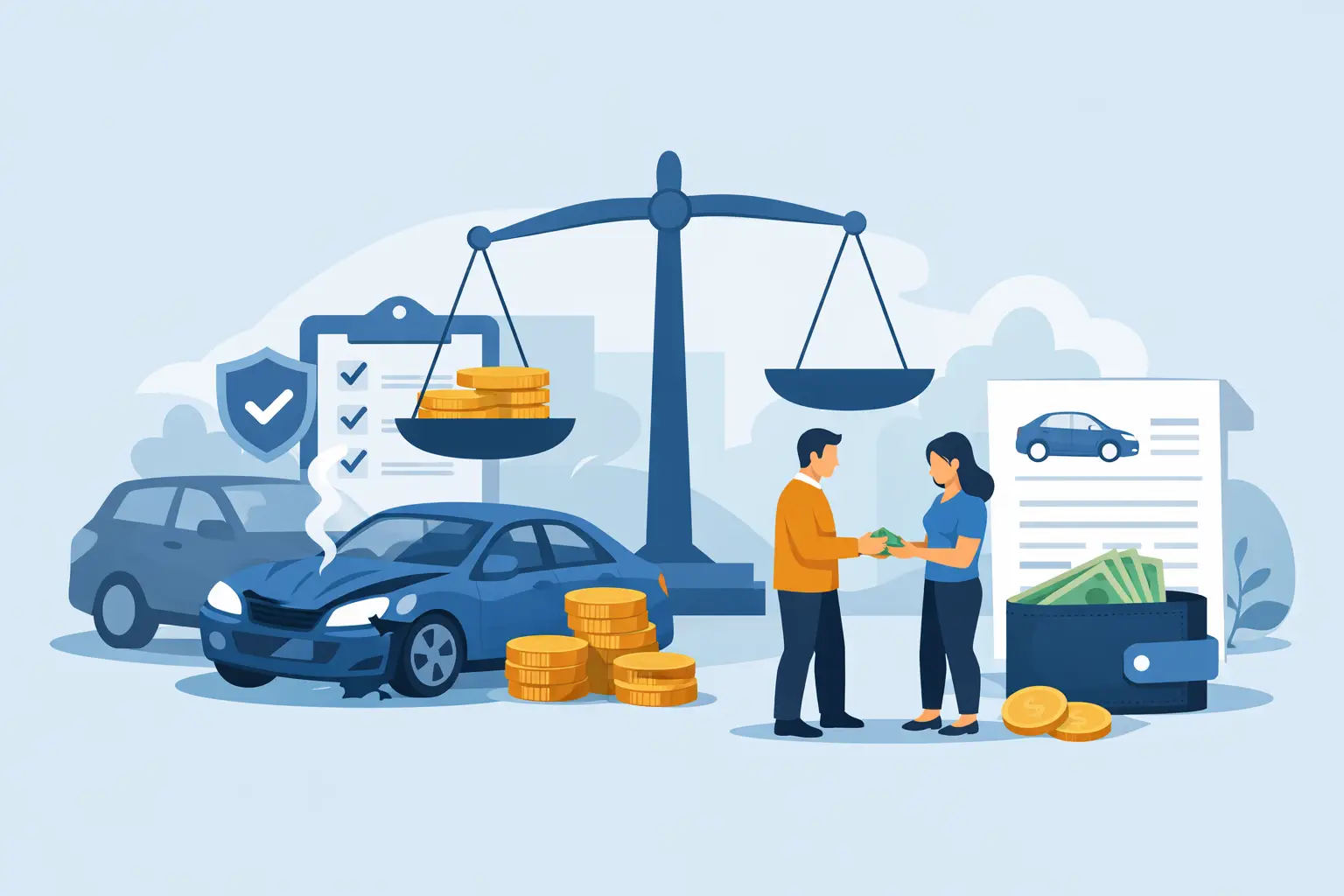
A £600 repair bill can feel manageable until you realise your car excess is £500. Your insurer may still arrange the repair and handle the claim, but you could be paying most of the cost yourself. That is why excess deserves as much attention as the headline price when you compare car insurance.
The right excess can help bring your premium down. Set it too high, however, and a minor accident, scrape or theft claim may not be worth making. Here is how it works and how to choose a figure that protects your budget.
What is car excess?
Car excess is the amount you agree to contribute towards an insured claim. It is not an extra charge added after an accident. It is part of your policy from the day cover starts, and it is shown in your policy schedule and insurer’s terms.
For example, if your total excess is £350 and your insurer approves £2,000 of damage repairs, you normally pay the first £350 and the insurer pays the remaining £1,650. Depending on the repairer and insurer, you may pay the excess directly to the garage when collecting your car, or it may be deducted from a settlement payment.
Excess is designed to stop insurance being used for every small cost. It also means drivers who are willing and able to take on more of the cost of a claim can sometimes get a lower premium.
Compulsory and voluntary excess
Your total excess is commonly made up of two parts: compulsory excess and voluntary excess.
Compulsory excess
The compulsory excess is set by the insurer. You cannot reduce or remove it when buying the policy. It can vary according to factors such as your age, driving experience, postcode, vehicle, claims history and the type of cover you choose.
A younger or less experienced driver may see a higher compulsory excess than an older driver with a long claim-free history. Insurers use their own pricing models, so the amount can differ significantly between quotes.
Voluntary excess
The voluntary excess is the amount you choose to add on top. Increasing it may reduce your annual or monthly premium because you are accepting more financial responsibility if you claim.
But the saving is not always large enough to justify a big increase. If increasing your voluntary excess from £250 to £750 saves only £35 a year, you would be taking on an extra £500 of potential cost for a relatively small immediate saving. Compare both the premium and the total excess before deciding.
The total is what matters
If an insurer sets a compulsory excess of £300 and you choose a voluntary excess of £250, your total excess is £550. This is the figure to keep in mind when deciding whether you could afford a claim.
Do not assume a quote with a low voluntary excess has a low overall excess. Always check the compulsory amount as well, along with any separate excesses that may apply.
When do you pay excess on car insurance?
You usually pay an excess when making a claim for damage to your own car under comprehensive cover. This could include an accident that was your fault, a single-vehicle incident such as hitting a bollard, vandalism, fire or theft. The precise position depends on your policy wording and claim circumstances.
If another driver is clearly at fault and their insurer accepts responsibility, you may not ultimately have to pay your excess. In practice, your insurer may initially ask you to pay it while the claim is being dealt with, then recover it from the other side once liability is agreed. Recovery can take time, and it is not guaranteed if fault is disputed or the other driver is uninsured.
With third party only cover, your insurer covers damage or injury you cause to others, not repairs to your own car. There is usually no excess for third-party damage, but your insurer will not pay for your own vehicle repairs in the first place. Third party, fire and theft cover may apply an excess to fire or theft claims, while accident damage to your own vehicle is not covered.
Separate excesses to check before you buy
A policy can have different excesses for different types of claim. The standard policy excess is not always the whole story. Check the documents for excesses that could apply to windscreen claims, theft, fire, accidental damage or young drivers named on the policy.
Windscreen cover is a common example. An insurer may charge a smaller excess for repairing a chipped windscreen and a higher one for a full replacement. Using an insurer-approved windscreen provider may also affect what you pay.
Some policies apply an additional excess if a younger named driver has an accident, especially where they are under a stated age. There may also be terms around repairs completed outside the insurer’s approved repairer network. Read these details before accepting a low-priced quote, not after a claim has happened.
Should you choose a higher voluntary excess?
A higher voluntary excess can make sense if you have savings available and are mainly insuring yourself against major costs. It can be a practical choice for a driver with a valuable car, a clean history and enough money set aside to pay the full total excess without borrowing.
It may be less suitable if a £500 or £1,000 unexpected bill would put pressure on your household budget. Insurance should provide reassurance when something goes wrong, rather than create another financial problem.
A sensible approach is to test a few excess levels when comparing quotes. Start with an amount you could comfortably pay tomorrow, then see how much the premium changes if you raise it. Choose the level where the saving feels worthwhile, rather than automatically selecting the highest option.
Be realistic about how you use your vehicle too. Someone who drives occasional short journeys on familiar roads may take a different view from a commuter covering high motorway mileage, or a parent regularly navigating busy school-run traffic. There is no universal best excess.
Does paying excess affect your no-claims discount?
Excess and no-claims discount are separate parts of car insurance. Paying an excess does not itself reduce your no-claims discount. However, making a fault claim, or a claim where your insurer cannot recover its costs from another party, may reduce your discount at renewal unless you have protected it.
Protected no-claims discount is not a promise that your premium will stay the same after an accident. Your discount may remain protected under the policy rules, but the underlying price can still rise because your claims history and risk profile have changed.
You should also tell your insurer about accidents and incidents when your policy requires it, even if you do not go ahead with a claim. A small bump that seems resolved at the roadside can later develop into a larger dispute.
Excess and optional add-ons
Optional extras can have their own terms. Motor legal protection may help with recovering uninsured losses, which can include your policy excess, where there is a valid case against a responsible third party. Courtesy car cover, breakdown and key cover may also have claim limits or excesses of their own.
Excess protection insurance is another separate product. It can reimburse some or all of an excess paid following a successful claim, subject to its limits and exclusions. It is not automatically included with every car policy, and it should not be used as a reason to select an unaffordable excess without checking the details carefully.
How to compare car excess properly
When reviewing car insurance quotes, look beyond the annual premium. Check the compulsory excess, the voluntary excess you selected, the total you could pay after a claim and any separate excesses. Then consider the cover itself: whether it meets your needs for repairs, windscreen damage, a courtesy car and use of approved repairers.
A lower premium is useful only if the policy remains practical when you need it. UKcompare lets you compare car insurance quotes from a wide range of providers, helping you weigh the price against the excess and cover on offer. Who Compares Wins!
Before you buy, ask one simple question: if you had an accident this week, could you pay the total excess without panic? Choosing an honest answer can save far more stress than chasing the cheapest-looking quote.