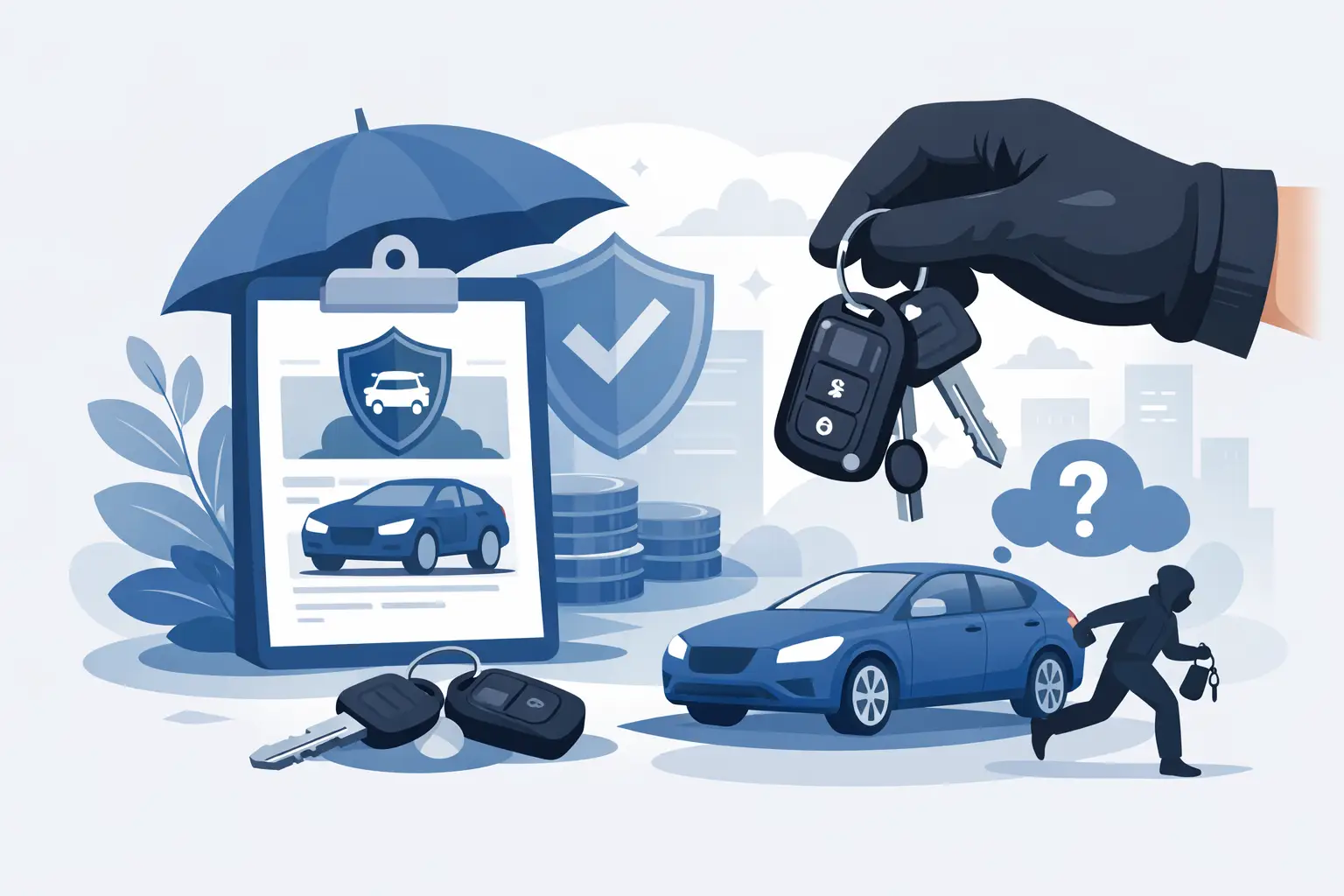
A handbag taken from a café table, a jacket lifted at the gym, or keys disappearing during a break-in can quickly become a car security problem. Does insurance cover stolen keys? Sometimes, but the answer depends on your policy type, whether the vehicle is at risk and the cover you selected when you bought it.
Replacing a modern car key is rarely as simple as cutting a new piece of metal. Remote fobs, transponder chips, keyless entry and immobiliser programming can make the bill run into hundreds of pounds. If the thief could identify your car or access it, your insurer may also recommend replacing locks or reprogramming keys to protect the vehicle.
Does insurance cover stolen keys?
Comprehensive car insurance is the policy most likely to help after keys are stolen, particularly where there is a clear risk that the thief could return and steal the car. Some comprehensive policies include key cover as standard; others sell it as an optional extra. Third party only and third party, fire and theft cover will usually not pay for replacement keys on their own.
The wording matters. A policy may cover the cost of replacing a lost or stolen key, while another may only pay if the keys were stolen rather than misplaced. Some provide a set cash limit for a replacement fob and call-out, whereas others cover the cost of changing locks and reprogramming the vehicle when security has been compromised.
Do not assume that a theft claim automatically means every related cost is covered. Your insurer will look at the circumstances, the level of cover and the reasonable cost of securing the vehicle. They may direct you to an approved locksmith, dealership or recovery provider rather than reimbursing any supplier you choose.
When your insurer is more likely to pay
A claim is generally stronger when the keys were stolen in a reported crime and there is evidence of how it happened. For example, if your bag containing your vehicle keys and driving licence is stolen, the risk to your car is obvious. The insurer may authorise replacement keys, erase the missing key from the vehicle’s system and, where necessary, change locks.
Cover may also apply when keys are stolen from your home during a burglary, from your workplace or from a parked vehicle, subject to policy conditions. You will normally need a crime reference number and may need to show the insurer that you still have any spare keys.
If your car itself is stolen using the keys, a comprehensive policy may cover the vehicle as a theft claim. However, insurers will investigate carefully. They may ask where the keys were kept, whether the vehicle was locked, and whether all keys can be accounted for. Honest, prompt information is essential.
When stolen key cover may be refused
Insurance is not designed to cover every inconvenience. A claim could be declined if you cannot meet a security condition in the policy or if there was avoidable carelessness. Leaving keys visible in an unattended car, keeping them by an open window, or handing them to someone not permitted to drive may create problems.
There can also be limits around unattended property. If keys were left in a coat or bag in a public place, the insurer may examine whether it was reasonably secure. This does not mean every theft will be rejected, but the facts matter.
A lost key is different from a stolen one. If you simply cannot find your keys, a standard comprehensive policy may not help unless you added dedicated key cover. Before paying for a replacement yourself, check the policy schedule and booklet for terms such as “keys”, “replacement locks”, “personal belongings” and “security devices”.
What stolen key cover can include
The best policies can cover more than the price of a new fob. Depending on the insurer and the situation, cover may pay towards:
- replacement keys and remote fobs;
- locksmith call-out charges and vehicle access;
- reprogramming the immobiliser or deleting the stolen key from the system;
- replacement locks or door barrels where needed to keep the car secure; and
- transport home or vehicle recovery if you are stranded.
There may be a maximum claim amount, usually shown in the key cover section. Luxury vehicles and newer keyless models can have expensive parts and programming requirements, so check whether the limit matches the likely cost of your keys. A £300 limit may be useful for a basic key, but less reassuring for a vehicle with sophisticated keyless technology.
For van drivers, the same principle applies, but security can be even more urgent. A stolen van key may put tools, stock and customer equipment at risk. Standard van insurance may cover the vehicle and its keys under the relevant terms, but it does not automatically cover every item carried inside. If you rely on your van for work, check the policy’s vehicle security requirements and any separate cover for tools or goods.
What to do when your car keys are stolen
Act quickly, especially if the keys were taken with anything showing your address, registration number or usual parking location. Your first job is to reduce the chance of the vehicle being targeted.
- Report the theft to the police and keep the crime reference number. Your insurer is likely to ask for it.
- Move the car to a safer location if you can do so without using the missing key. A secure garage, driveway with a physical barrier, or monitored car park may be better than leaving it in its usual spot.
- Call your insurer or key cover provider as soon as possible. Tell them whether the thief has details that could identify your vehicle or its location.
- Ask what security work they approve before ordering keys, changing locks or booking a dealership. Unauthorised costs may not be fully reimbursed.
- Keep receipts, correspondence and details of all remaining keys. If the vehicle has a spare key, do not assume it is safe to use without reprogramming the lost one out of the system.
If there is an immediate risk to the car, tell the insurer that clearly. They may arrange emergency assistance or approve security work faster than a routine replacement request.
Will a stolen key claim affect your premium?
It can. If the claim is made under your motor policy, you may need to pay an excess and it could affect your no-claims discount unless it is protected. Even where key cover is included, claims can be recorded and may influence the price offered at renewal.
That does not automatically mean you should pay yourself. Compare the full cost of replacement, programming and securing the vehicle with your excess and the potential impact on future premiums. A straightforward replacement key might cost less than making a claim. A stolen key linked to your address, car documents or an attempted vehicle theft is a different calculation because proper security work can be far more expensive.
Ask the insurer whether a claim under a separate key cover benefit affects your no-claims discount. The answer varies by provider, so getting it confirmed before you proceed can avoid surprises.
Check your cover before you need it
The most useful time to check key cover is before anything goes missing. Look for the policy excess, claims limit, lost-versus-stolen rules, emergency assistance and any requirement to use approved suppliers. Keep spare keys somewhere safe at home, away from vehicle documents, and consider a signal-blocking pouch if you own a keyless car.
When renewal comes around, compare the cover as well as the price. A cheaper policy with a high excess or no key protection may not be the best value if replacing your vehicle’s key would be costly. UKcompare can help you compare car and van insurance quotes, but always read the policy details before choosing.
A stolen key is stressful enough without uncertainty over the bill. Keep the vehicle secure, contact your insurer promptly and make sure the cover you choose suits the way you use your car or van.