
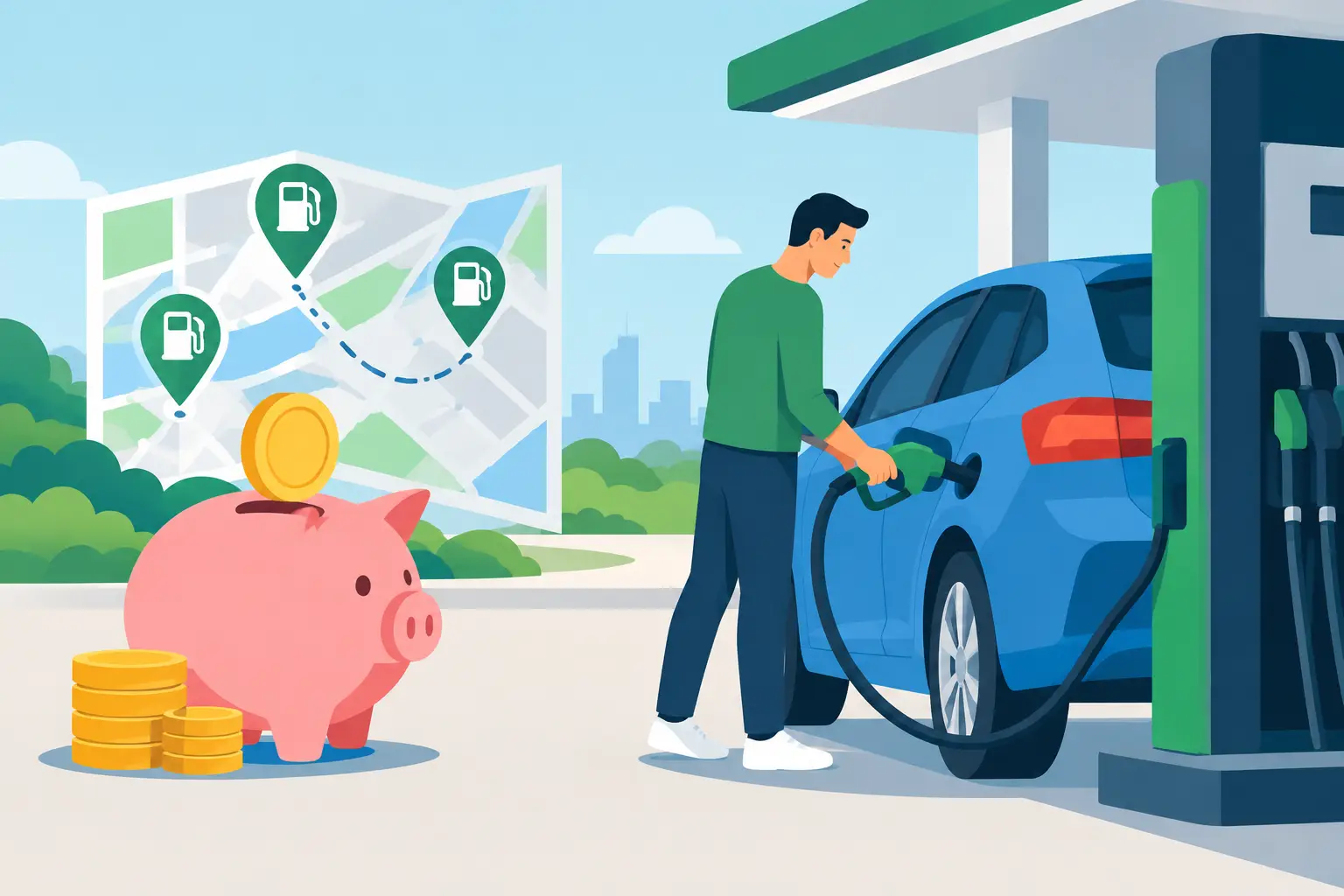
A few pence per litre can look insignificant on a forecourt sign. On a 55-litre fill-up, though, a 10p difference adds £5.50 straight to your motoring costs. Learn how to find cheap fuel before the warning light appears and you can keep more control over what you spend – particularly if you drive high mileage for work, run a van or make regular family journeys.
The lowest advertised price is not always the cheapest fuel for you. A station five miles out of your way may save pennies at the pump but cost more in fuel and time to reach. The smart approach is to compare nearby prices, plan ahead and make every litre go further.
How to find cheap fuel near you
Start by checking local prices before you leave home or set off from work. A fuel-price map makes this much easier than relying on the station you happen to pass first. Search around your usual routes: near home, your workplace, the school run, regular delivery areas or the supermarket you already use.
Prices can vary sharply between neighbouring towns and even between stations on the same road. Motorway service areas are often convenient, but convenience usually comes at a premium. If you know a longer trip is coming up, filling up before joining the motorway can make a worthwhile difference.
Price should not be the only number you compare. Look at the distance to the station, whether you would need a special journey and how much fuel is actually in your tank. Driving several extra miles to save 2p per litre on a partial fill rarely stacks up. Saving 8p or 10p per litre on a full tank at a station already on your route is a different matter.
UKcompare’s fuel-price map can help you compare local forecourts quickly, so you can make a practical choice rather than guessing at the pump.
Compare the price per litre, not the total spend
It is easy to be drawn to a lower bill when you only put in £20. But the key figure is pence per litre. A cheaper per-litre price delivers the saving whether you are topping up a car, filling a work van or preparing for a long journey.
For example, if one station charges 142.9p per litre and another charges 149.9p, the difference is 7p per litre. On 50 litres, that is £3.50. Repeat that every week and it can add up to more than £180 over a year.
Check prices before a long journey
Long-distance driving gives you the best chance to plan. Check prices the evening before, then identify one or two sensible places to refuel before expensive stretches of road. Do not wait until the tank is nearly empty, as that removes your choice and can force you into the nearest station.
For van drivers, this planning can be even more valuable. Fuel is a regular operating cost, and an avoidable price difference across repeated fill-ups can eat into the margin on each job. Build a quick price check into the routine before a day of calls rather than treating it as an extra task.
Choose the right time to fill up
Fuel prices move for several reasons, including wholesale costs, exchange rates, supply conditions and local competition. There is no guaranteed best day or hour to buy fuel, so avoid chasing rumours about a specific weekday. Current local prices matter more than a supposed national pattern.
What does work is buying before you are under pressure. Aim to refill when you still have enough fuel to choose between several nearby stations. For many drivers, this means planning at around a quarter of a tank rather than running it down to the fuel light.
If prices are falling locally and you only need a small amount to get through the next few days, a modest top-up may be sensible. If you have found a genuinely competitive price on your normal route and need fuel soon anyway, filling up is usually the simpler decision. Trying to predict every market movement can cost more time than it saves.
Supermarket, independent or branded forecourt?
There is no single answer. Supermarket forecourts can be competitively priced because they attract shoppers already visiting the site. Independent stations may also offer excellent value, particularly where local competition is strong. Branded forecourts can sometimes cost more, especially in high-traffic locations, but prices vary widely by area.
The best rule is to compare, not assume. A supermarket station is only a bargain if its displayed price beats convenient alternatives. Equally, a nearby independent might be cheaper than a station you have always thought of as the low-cost option.
Most drivers should use the fuel grade specified in their vehicle handbook. Premium petrol or diesel may suit particular engines or driving patterns, but it is not automatically a money-saving choice. Paying extra only makes sense if your manufacturer recommends it or you have a clear reason to use it. Using the wrong grade to cut costs is a false economy and could lead to performance issues or damage.
Make a cheaper tank last longer
Finding a lower pump price is only half the job. Your driving and vehicle condition decide how far that fuel takes you. Small improvements can make a meaningful difference, especially across thousands of miles a year.
Keep your tyres at the pressures recommended for your vehicle and load. Under-inflated tyres increase rolling resistance, which means the engine works harder and uses more fuel. Check them when cold and do not forget that a heavily loaded car or van may require different pressures.
Smooth driving also pays. Accelerate progressively, read the road ahead and avoid harsh braking where it is safe to do so. Maintaining a steady speed is generally more efficient than repeatedly speeding up and slowing down. On faster roads, reducing your cruising speed slightly can lower fuel use and make journeys less stressful.
Remove unnecessary weight from the boot or load space. A few items will not transform your fuel economy, but heavy tools, unused equipment and roof accessories add up. Roof bars and roof boxes create drag, so take them off when they are no longer needed. For van owners, organise loads carefully and avoid carrying stock or equipment that is not required for the day’s work.
Regular servicing matters too. An engine with the correct oil, clean filters and no unresolved warning lights has a better chance of running efficiently. If your fuel use suddenly rises, do not simply accept it. Check tyre pressures first, then consider whether a mechanical issue, sticking brake, poor wheel alignment or changing journey pattern could be responsible.
Avoid false savings at the pump
A very cheap price is not worth taking risks for. Do not use fuel stored in unsuitable containers, buy from unverified sellers or ignore warning signs about a poorly maintained forecourt. Stick to reputable filling stations and use the correct fuel for your vehicle.
It is also worth separating fuel-saving decisions from insurance decisions. Lower annual mileage can sometimes affect the price of car, van or motorbike cover, but only declare mileage you genuinely expect to drive. An inaccurate estimate could cause problems if you need to claim. The better solution is to track your mileage honestly, reduce avoidable journeys where possible and compare insurance quotes when renewal comes around.
Turn fuel comparison into a weekly habit
The biggest savings usually come from routine, not one lucky fill-up. Check local prices once or twice a week, keep a mental note of the best convenient stations and plan motorway journeys before you leave. If you share a vehicle, agree where to fill up so nobody makes an expensive last-minute stop.
You do not need to chase the lowest price in the county. Choose a station with a competitive price that fits naturally into your journey, maintain your vehicle and avoid driving until the tank is almost empty. Those simple habits can keep fuel costs lower without adding unnecessary miles to your week.
When every pound has a job to do, comparing before you fill up is a small action that can deliver a saving again and again. Who Compares Wins!