A few pence added to a litre may not look dramatic on a petrol station sign. For a commuter filling up every week, a family planning a long holiday drive or a van driver covering several jobs a day, it soon becomes real money. Fuel price volatility can turn a predictable monthly motoring budget into a moving target, especially when the cost of filling a tank changes faster than household bills do.
Pump prices are not something a driver can control. The way you buy, use and plan fuel is. A few practical choices can reduce the effect of sharp price rises without making every journey a chore.
What causes fuel price volatility?
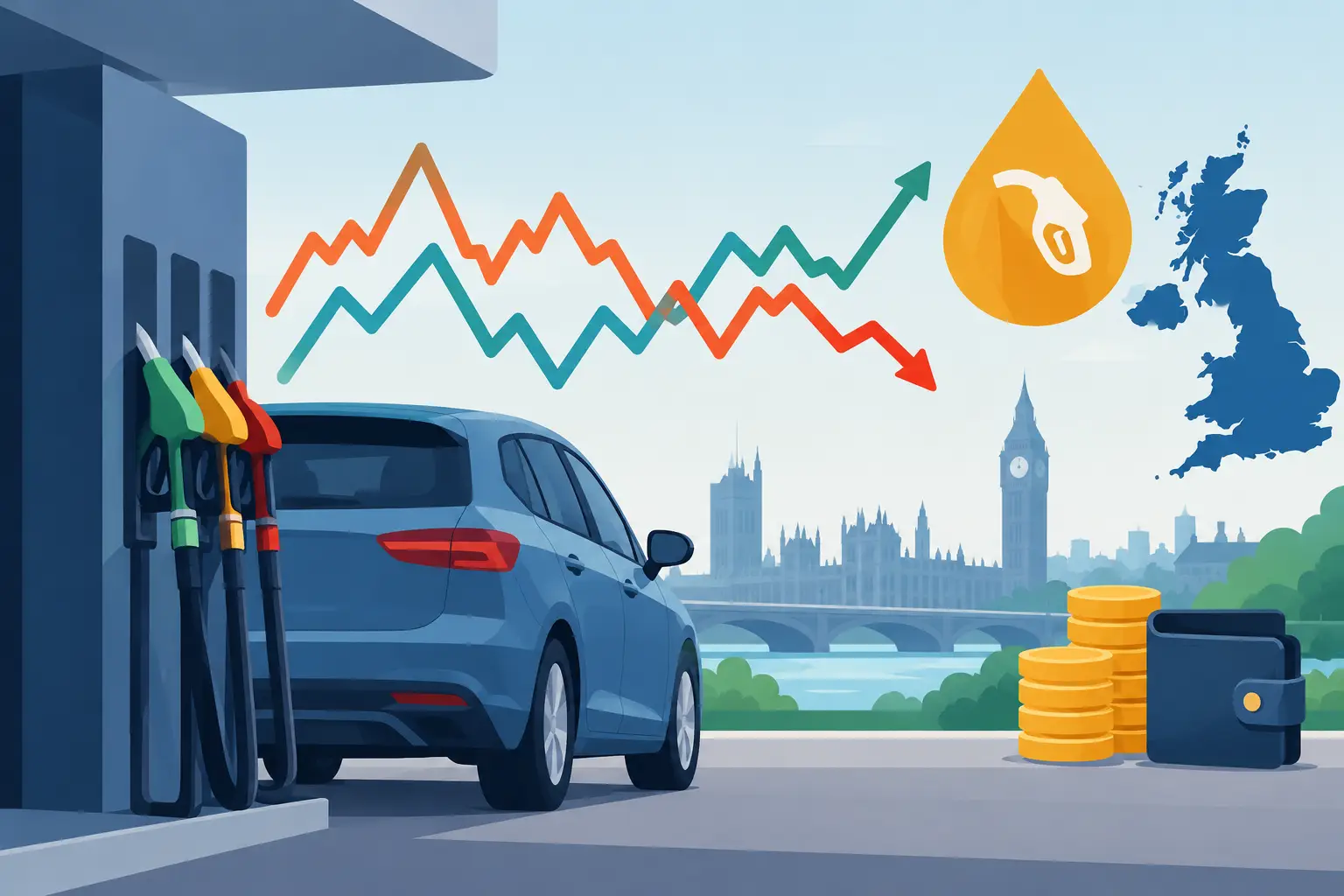
The price on the forecourt is shaped by far more than the local petrol station. Crude oil is traded globally, usually in US dollars, so changes in oil supply, worldwide demand and the pound-to-dollar exchange rate all feed into UK prices. When sterling weakens against the dollar, buying oil can cost more even if the oil price itself has not moved much.
Refining costs, distribution, retailer margins and UK fuel duty also play a part. VAT is charged on top of the final price, including duty. This is why a rise in the underlying cost of fuel can feel larger by the time it reaches the pump.
Events outside the UK can cause the quickest swings. Production cuts by oil-producing countries, disruption to shipping routes, conflict, severe weather and unexpected refinery problems can all tighten supply or unsettle markets. Demand matters too. A busy travel season or a recovering global economy can push prices upwards.
There is also a delay between market headlines and forecourt prices. Stations do not all buy stock at the same moment or from the same supplier, so prices can rise or fall at different speeds in different areas. That is frustrating when you need fuel now, but it also creates an opportunity to compare local prices rather than assuming every station is charging roughly the same.
Why pump prices vary so much by location
Two petrol stations only a few miles apart can display noticeably different prices. Supermarket sites may use low fuel prices to attract shoppers, while motorway service areas have higher operating costs and a more captive audience. Rural sites may face longer delivery distances, and independent forecourts may have less buying power than larger chains.
Convenience has a price. Filling up on a motorway when the fuel light appears may be necessary, but making it your usual habit can add a significant amount over a year. If you regularly use the same routes, identify a few lower-priced stations near home, work or your normal shopping destination.
A fuel-price map can help here. Check prices before a planned fill rather than driving around purely to save a penny. A lengthy detour burns fuel, costs time and can wipe out the saving. The best option is usually the cheapest sensible stop already close to your route.
How fuel price volatility affects your real driving costs
The impact depends on mileage and efficiency. Consider a petrol car with a 50-litre tank. A 10p per litre rise adds £5 to a full fill. That may seem manageable, but a driver filling up four times a month pays roughly £240 more over a year at that higher price.
For van owners, the effect can be greater. A larger tank, heavier load and higher annual mileage mean that even small changes at the pump deserve attention. If your van is essential for work, fuel is not an occasional expense. It is part of the cost of every job, so keeping accurate records helps you see whether price rises, extra mileage or poorer fuel economy are driving costs up.
Fuel costs should also be viewed alongside the full cost of motoring: insurance, vehicle tax, servicing, tyres, repairs, parking and finance payments. You cannot control all of these, but comparison and good vehicle maintenance can help prevent one higher cost from putting pressure on the rest of your budget.
Practical ways to spend less on fuel
The biggest savings usually come from using fewer litres, not chasing every small change in pump prices. Start with your driving habits. Smooth acceleration, reading the road ahead and easing off early for junctions can reduce unnecessary braking and fuel use. Harsh acceleration and high speeds use more fuel, particularly on longer journeys.
Tyre pressure is another simple check with a meaningful payoff. Under-inflated tyres create more rolling resistance, which can increase fuel consumption and affect handling and tyre wear. Check pressures when tyres are cold and use the vehicle manufacturer’s recommended settings, including any different figure for a loaded car or van.
Avoid carrying weight you do not need. Sports equipment, tools, packaging and clutter all add up, especially in a van. Roof boxes and roof bars can increase aerodynamic drag too. If you are not using them, removing them can make sense, particularly before regular motorway journeys.
Plan journeys with purpose. Combining errands into one route can be more efficient than several short, cold-engine trips. Use navigation to avoid predictable congestion where possible, but do not assume the shortest route is automatically the cheapest. Stop-start traffic, steep routes and diversions can use more fuel than a slightly longer, free-flowing journey.
For a car that is used mainly for short local trips, ask whether some journeys could be walked, cycled or combined with another task. For a working van, more efficient route planning may mean grouping jobs by area and reducing return visits. The right answer depends on your routine, passenger needs and time pressures, but the principle is straightforward: avoid miles that deliver no value.
Fuel-saving claims: where drivers should be cautious
When prices rise, products promising dramatic improvements in miles per gallon often appear tempting. Be wary of fuel additives, magnets and other devices that claim guaranteed savings without clear, independent evidence. The cost of the product itself can cancel out any small benefit.
Premium fuel may be suitable for some vehicles, particularly where the manufacturer recommends it, but it is not automatically the cheapest choice for every car or van. Check the handbook. If your vehicle is designed for standard unleaded or diesel, paying more does not necessarily mean you will recover the difference through better economy.
The same goes for filling the tank to the brim to beat a predicted price rise. It can be sensible if you know you will use the fuel shortly and the station is competitively priced. But storing fuel at home brings safety considerations, and buying extra fuel after a long detour is a false economy.
Keep maintenance from becoming a fuel bill
A vehicle that is not running properly can quietly consume more fuel. A clogged air filter, worn spark plugs in a petrol vehicle, sticking brakes, poor wheel alignment or an engine warning light should not be ignored. Regular servicing helps protect reliability as well as fuel economy.
Diesel drivers should pay particular attention to the type of journeys they make. Frequent short runs may not allow the diesel particulate filter to regenerate properly. That can lead to warning lights and expensive problems, not just poorer efficiency. The solution is not simply to take unnecessary drives, but to follow the manufacturer’s guidance and address warnings promptly.
If you are considering changing vehicle, look beyond the official mpg figure. Think about the journeys you actually make, the loads you carry, where you park and how many miles you cover. A more efficient car or van can reduce exposure to changing pump prices, but only if it suits your real needs and the overall purchase, finance and insurance costs add up.
Do not let fuel rises push insurance to the back of the queue
When fuel becomes more expensive, it is tempting to cut every other motoring cost as quickly as possible. Insurance is not the place to reduce protection blindly. Choosing a policy solely because it has the lowest premium can leave you without features you may genuinely need, such as suitable cover for commuting, carrying tools, protected no-claims discount or a courtesy vehicle.
A better approach is to compare cover as well as price ahead of renewal. Check that your mileage estimate is accurate, your occupation and use are correctly declared, and any optional extras are worthwhile for your circumstances. Paying annually can be cheaper than monthly instalments if you can afford it, while sensible security measures and realistic mileage may help keep premiums under control.
Fuel prices will keep moving. Your advantage comes from making small decisions before the warning light comes on: keep the vehicle efficient, compare nearby forecourts, plan useful journeys and review the costs you can control. For insurance, compare carefully too – Who Compares Wins!