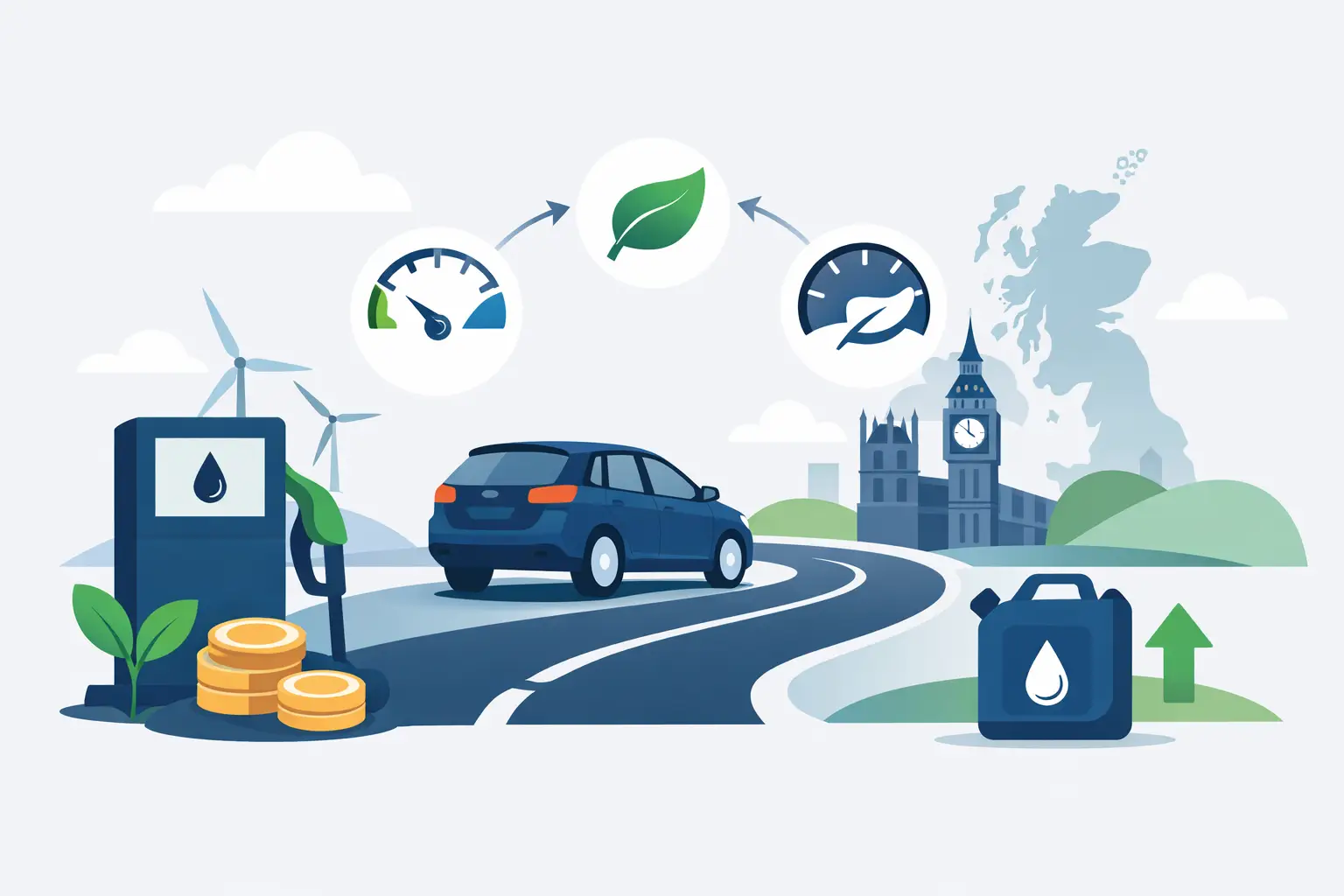
A few hard accelerations on a short run to the shops may not feel costly. Add them up across a month of commuting, school runs and weekend errands, however, and they can make a noticeable dent in your fuel budget. These fuel saving driving tips focus on the choices that genuinely reduce petrol or diesel use on UK roads, without turning every journey into a slow crawl.
Fuel economy is not only about the car or van you drive. It is shaped by how smoothly you use the controls, whether the vehicle is properly maintained, how much unnecessary weight you carry and the type of trips you make. Small changes are often easier to stick with than dramatic ones – and the savings can free up money for servicing, insurance and everyday motoring costs.
Start with smoother driving
The most useful habit is simple: look further ahead. When you spot a queue, a red light or slowing traffic early, you have time to ease off the accelerator rather than brake sharply at the last moment. That preserves momentum and avoids using extra fuel to regain speed.
Accelerate steadily rather than aggressively, then settle into the highest suitable gear as soon as the engine is comfortable. In a manual vehicle, labouring the engine in too high a gear is not efficient, so listen for vibration or a strained note and change down when needed. In an automatic, measured throttle inputs usually help the gearbox select higher gears sooner.
Speed has a major effect too. Air resistance rises quickly at faster speeds, particularly on dual carriageways and motorways. Reducing your cruising speed slightly can improve mpg, and it may make the journey calmer as well. Keep within the speed limit, leave enough space from the vehicle ahead and avoid the repeated accelerate-brake pattern that wastes fuel in congested traffic.
Use cruise control with judgement
Cruise control can help on long, level motorway stretches because it prevents unnecessary fluctuations in speed. It is less helpful on steep or rolling roads, where the system may use more throttle to hold an exact speed uphill. On those routes, allowing a modest reduction in speed on climbs and building it back gently downhill can be more economical, provided it is safe and legal.
Cut avoidable engine running time
An engine burns fuel whenever it is running, even when the vehicle is stationary. If you expect to wait for more than a brief moment, such as at a level crossing or while collecting someone, switching off can save fuel. Many newer cars and vans have stop-start technology for this reason.
There are exceptions. In very slow, stop-start traffic, repeatedly restarting can become frustrating, and you should never switch off if doing so could compromise safety, visibility or your ability to move promptly. Follow the vehicle handbook, especially if you drive a diesel with particular emissions-system requirements.
Warm up by driving gently, not by leaving the engine idling on the drive. Modern engines reach operating temperature more efficiently when the vehicle is moving. For the first few miles, avoid harsh acceleration and high revs until everything has warmed through.
Keep tyres and maintenance in check
Underinflated tyres increase rolling resistance, meaning the engine must work harder to move the vehicle. Check pressures at least once a month, and before a long journey, when the tyres are cold. Use the pressure recommended for your load – a family holiday, work equipment or a full van may require a different setting from everyday solo driving.
Do not overinflate in the hope of saving fuel. It can reduce grip, affect braking and cause uneven tyre wear. Correct pressure is the target, not maximum pressure.
A neglected vehicle can also use more fuel than it should. Stick to the service schedule and deal with warning lights promptly. A blocked air filter, worn spark plugs, poor wheel alignment or a brake that is binding can all harm efficiency. If the car pulls to one side, the steering wheel is off-centre or tyres are wearing unevenly, book an alignment check rather than simply accepting the extra fuel use.
For diesel drivers, regular longer runs can be important where the vehicle has a diesel particulate filter. Repeated short trips may prevent the filter from regenerating properly, potentially leading to faults and costly repairs. If most of your driving is local, it is worth considering whether a petrol, hybrid or electric vehicle would better suit your next change of vehicle.
Remove weight and wind resistance
Carrying an emergency kit is sensible. Carrying months of forgotten clutter is not. Remove heavy items from the boot, load area or rear seats when you do not need them. The effect of a few bags may be modest, but persistent extra weight makes a difference over thousands of miles, especially in urban driving with frequent acceleration.
Roof boxes, roof bars and bike racks create drag even when empty. Take them off after your trip if practical. This matters most at higher speeds, where aerodynamic resistance has a bigger impact on consumption.
Keep windows closed when travelling quickly, particularly on motorways. At lower town speeds, opening a window may be more sensible than using air conditioning, but there is no single rule for every journey. Air conditioning places a load on the engine, while open windows increase drag. Use ventilation and climate control as needed for comfort and safe demisting, then avoid running the air conditioning harder than necessary.
Plan journeys before fuel becomes urgent
The cheapest mile is often the one you do not drive. Combine nearby errands into one route rather than making several separate cold-start journeys. If you work from home some days, schedule appointments and shopping around the days you are already out. For van drivers, grouping deliveries or call-outs by area can reduce mileage, traffic exposure and fuel spend.
Before setting off, check for major roadworks, closures and congestion. The shortest route is not always the most economical if it involves long queues, steep detours or constant stop-start traffic. A slightly longer, freer-flowing route can use less fuel and take less time.
Avoid leaving fuel purchases until the warning light comes on. That can force you to buy at the nearest, most expensive forecourt. Checking local prices before a planned fill-up gives you more choice. It is also sensible to keep enough fuel for unexpected diversions, especially on unfamiliar routes or in poor weather.
Do not chase a bargain with an extra journey
Driving several miles out of your way to save a few pence per litre can cancel out the saving. Compare prices along routes you already use, or fill up when passing a competitively priced station during a necessary trip. Cost-conscious motoring is about the total cost, not just the number displayed on the pump.
Choose the right fuel and driving mode
Use the fuel grade specified by the manufacturer. Premium petrol is not automatically better value for every car, and putting a higher-priced fuel in a vehicle designed for standard unleaded may not deliver enough extra mpg to justify the cost. Some engines can benefit, so check the handbook and assess any claimed improvement over several full tanks rather than one journey.
If your vehicle has Eco mode, try it for normal day-to-day driving. It commonly softens throttle response, adjusts gear changes in automatics and moderates climate-control demand. It will not overcome poor driving habits, but it can make efficient driving easier. Switch modes when conditions require it – a steep hill, a heavy load or a safe overtaking manoeuvre may call for more immediate response.
Track your real-world mpg
The dashboard fuel-economy display is useful, but recording litres bought and miles covered gives a clearer long-term picture. A sudden drop in mpg can reveal a maintenance issue, changing traffic patterns or a new driving habit before it becomes an expensive problem.
Compare similar journeys rather than expecting one perfect figure. Winter weather, short trips, heavy loads, rain, hills and motorway speeds all affect results. The goal is steady improvement, not competing with the official mpg figure quoted when the vehicle was new.
Fuel savings work best alongside a wider approach to motoring costs. Fewer miles can reduce wear and tear, and accurately declaring your annual mileage when comparing insurance helps ensure your quote reflects how you actually use the vehicle. When renewal time comes, UKcompare can help you compare motor cover quickly – because Who Compares Wins!
Pick one change for your next week of driving: check the tyre pressures, remove the unused roof rack, or practise easing off earlier for junctions. Once it becomes automatic, move on to the next one. The savings are rarely dramatic on a single trip, but they are real where it matters – across every mile you drive.