
A few miles per gallon can make a real difference when petrol and diesel prices are high. Whether you drive a family car, commute every day or rely on a van for work, learning how to save fuel on journeys can lower your weekly costs without making every trip slower or less practical.
The biggest savings rarely come from one dramatic change. They come from planning ahead, keeping your vehicle in good order and driving with less wasted effort. Some steps take seconds before you set off. Others may require a small spend on maintenance, but can pay back over time.
Plan journeys to save fuel on journeys
The shortest route is not always the cheapest route. A route that looks good on a map may include repeated stop-start traffic, steep hills, roadworks or long queues at busy junctions. That kind of driving uses more fuel than a slightly longer route with a steady, flowing speed.
Check traffic before leaving, particularly for regular commutes, school runs and delivery rounds. If your schedule allows it, travelling outside the busiest periods can reduce idling and harsh acceleration. For longer trips, plan a sensible comfort break rather than making several unplanned stops. It gives you time to refuel where prices are better, too.
For van drivers, grouping jobs by area is often one of the most valuable changes. Fewer cross-town trips mean fewer cold starts and less time spent crawling through congestion. It can also reduce wear on brakes, tyres and the clutch.
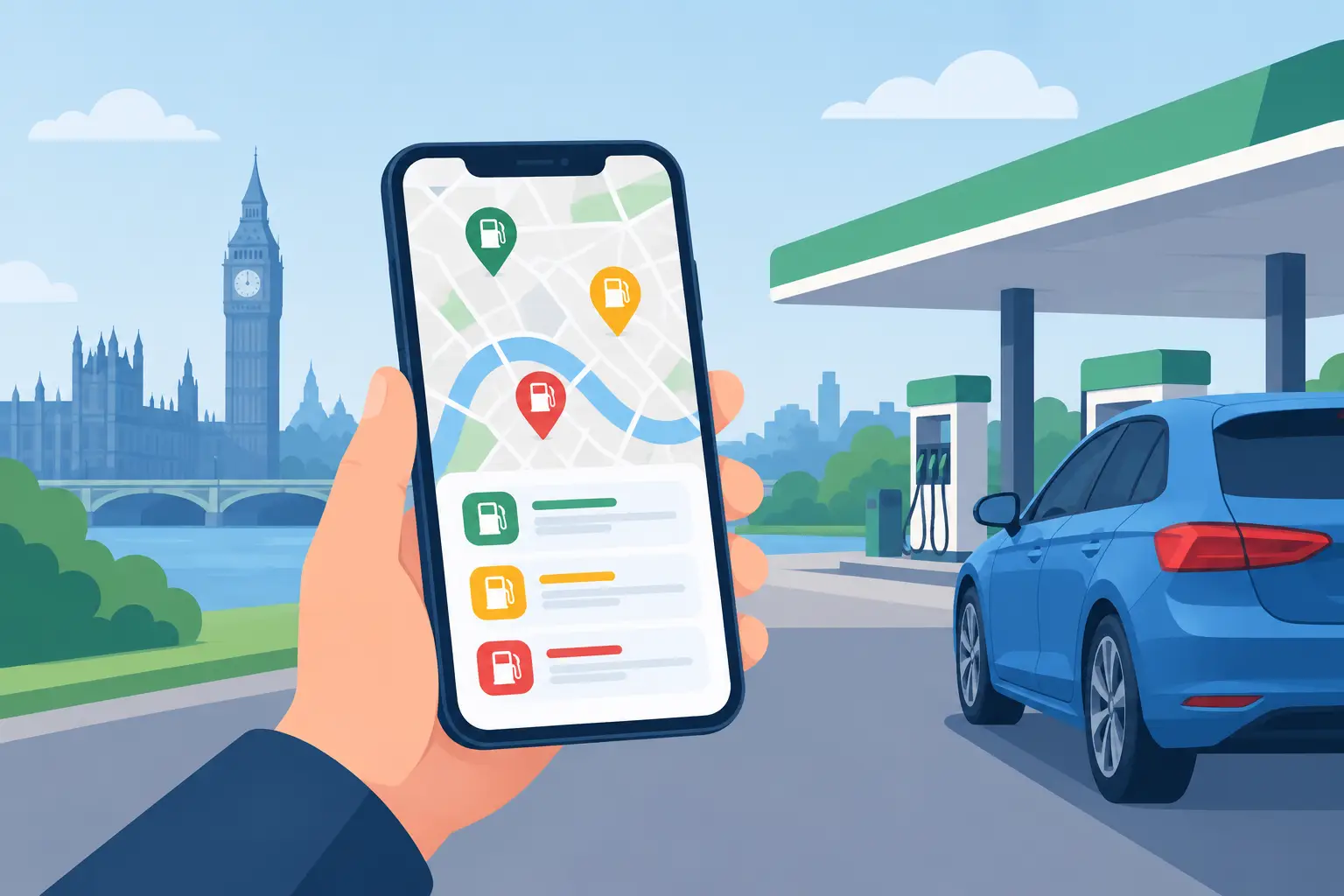
Fuel price matters as well. Filling up at a cheaper forecourt can make a noticeable difference across a full tank, especially for high-mileage drivers. UKcompare’s fuel-price map can help motorists compare local prices before they set off or choose where to refuel on a longer journey.
Drive smoothly, not slowly
Saving fuel does not mean driving so slowly that you hold up traffic. It means using the accelerator, brakes and gears with purpose. Read the road ahead, leave a safe gap and ease off early when you can see traffic slowing, a red light or a roundabout approaching.
Sharp acceleration sends more fuel into the engine. Heavy braking then throws away the speed you have just paid to build. Gentle, progressive acceleration and earlier lifting off can improve economy while making the drive calmer for passengers and safer for other road users.
On a clear motorway or dual carriageway, high speed has a cost. Air resistance rises rapidly as speed increases, so a modest reduction in cruising speed can improve fuel use on a long run. Stay within the limit, choose a speed that suits the conditions and use cruise control only where the road is reasonably level and traffic is light. On rolling roads, cruise control can keep adding power uphill when a small natural drop in speed would use less fuel.
Use the right gear
In a manual vehicle, change up smoothly once the engine is working comfortably, rather than revving hard through every gear. Labouring the engine in too high a gear is not efficient either, so listen and respond to the road. In an automatic, gentle throttle inputs usually encourage earlier gear changes.
If your car or van has an eco mode, try it for everyday driving. It may soften accelerator response or alter gear changes. It will not suit every situation, particularly when joining fast-moving traffic or carrying a heavy load, but it can discourage unnecessary fuel use around town.
Start with tyres and basic maintenance
Tyres have a direct effect on fuel consumption. Under-inflated tyres create more rolling resistance, forcing the engine to work harder. Check pressures at least once a month and before a long trip, using the figures in your vehicle handbook or on the tyre-pressure label. Check them when the tyres are cold for the most accurate reading.
Do not simply inflate tyres to the highest number shown on the sidewall. Your vehicle may have different recommended pressures for normal use and for a fully loaded car or van. Using the correct setting supports fuel economy, tyre life, handling and braking.
A poorly maintained engine can also cost you at the pump. Follow the service schedule, use the correct engine oil and deal with warning lights promptly. A blocked air filter, worn spark plugs in a petrol vehicle, or an engine fault can all affect performance and consumption. If your fuel use suddenly climbs without an obvious reason, book a check rather than assuming it is just the weather or traffic.
Wheel alignment is worth checking if the vehicle pulls to one side, the steering wheel is off-centre or tyres are wearing unevenly. Misalignment can increase tyre wear and rolling resistance, and replacing tyres early is an avoidable expense.
Carry less and reduce drag
Every item in the boot or load area needs energy to move. Clearing out unneeded tools, sports kit, packaging and other clutter is an easy win. The effect may be modest in a small car, but it grows when weight builds up day after day.
For van owners, the answer is not to remove essential equipment. Instead, review what stays in the vehicle between jobs. Secure loads properly and avoid carrying surplus materials across the country just in case they might be needed. Better stock planning can cut fuel use and make the van safer to drive.
Roof bars, roof boxes and bike racks increase wind resistance, particularly at motorway speeds. Remove them when they are not needed. An empty roof box can still add a surprising fuel penalty over a long journey.
Air conditioning also uses fuel, though the trade-off is comfort and clear windows. Use it sensibly rather than avoiding it on a hot day or when demisting is needed. At higher speeds, driving with all windows open can create enough drag that air conditioning may be the better option. Around town, opening a window briefly may be perfectly reasonable.
Avoid wasting fuel when stationary
Modern engines do not need long warm-ups on the driveway. Start the vehicle, allow a moment to settle, then drive gently until the engine reaches normal temperature. Idling for several minutes burns fuel while getting you nowhere and can be restricted in some areas.
If you expect to be stopped for more than a short time and it is safe to do so, switch off the engine. Many newer vehicles do this automatically with stop-start technology. If you find stop-start intrusive in heavy traffic, understand how your car behaves before turning it off routinely. The system is designed to reduce fuel used at idle, but comfort, battery condition and specific traffic conditions can affect whether it feels worthwhile.
Choose fuel and refuelling habits carefully
Use the fuel grade recommended by the manufacturer. Premium petrol or diesel is not automatically the economical choice for every engine. If your handbook does not require it, paying extra may not deliver enough improvement in fuel economy to justify the cost. Conversely, if a higher grade is specified, using the correct fuel protects performance and may prevent costly problems.
Avoid running the tank extremely low. It can leave you forced to fill up at an expensive motorway service station or wherever is closest. Keeping enough fuel for a little flexibility lets you compare local prices instead of buying under pressure.
For diesel drivers who mainly make short trips, occasional longer drives at normal operating temperature can be helpful, depending on the vehicle and its use. Repeated short runs may contribute to diesel particulate filter issues. If warning lights appear, follow the vehicle guidance and seek advice promptly rather than continuing to drive and risking a larger repair bill.
Make mileage part of your wider motoring costs
Fuel is only one cost linked to how and when you drive. Higher annual mileage can mean more servicing, tyres and depreciation, and it may affect your motor insurance premium. When getting car or van insurance quotes, give an honest and realistic annual mileage figure. Underestimating it to chase a lower price can create problems if you need to make a claim.
If your work pattern or commute has changed, update your estimate at renewal rather than copying last year’s figure. Combining journeys, using local services where practical and reducing unnecessary trips can lower fuel spend while helping you keep mileage under control.
The useful target is not perfection on every drive. It is a set of habits that makes each tank last a little longer: check your tyres, plan the route, lose the unnecessary weight and leave enough time to drive smoothly. Those small decisions can keep more money in your pocket for the journeys that matter.