A motorhome sitting on your drive can be worth as much as a small flat deposit, yet it may only travel a few thousand miles a year. That is why it pays to choose motorhome cover based on how you actually use it, rather than simply selecting the lowest annual price. A cheap policy that excludes winter storage damage, has a high excess or does not cover the European trip you have planned can be an expensive false economy.
Motorhome insurance is different from standard car insurance. Your vehicle is both transport and temporary accommodation, often carrying personal belongings, fitted equipment and expensive accessories. The right cover should protect the vehicle, reflect your mileage and give you practical help when a breakdown interrupts a holiday.
Start with the cover you legally need
At the minimum, a motorhome used on UK roads needs third-party insurance. This pays for injury or damage you cause to other people, their vehicles or their property. It does not pay to repair or replace your own motorhome following an accident, fire or theft.
Third-party, fire and theft adds protection if your motorhome is stolen or damaged by fire. Comprehensive insurance is the broadest usual option. It can cover accidental damage to your own vehicle as well as third-party claims, subject to the policy terms and excess.
Comprehensive cover is often the sensible starting point for a motorhome because repairs can be specialist work. Panels, roof sections, integrated cab fittings and habitation equipment can cost far more to put right than a similar-looking car repair. Still, comprehensive policies are not all alike. Read what is included rather than assuming every benefit is standard.
Choose motorhome cover around your travel pattern
The best policy depends on whether you take occasional weekends away, tour Britain for months at a time or spend winters abroad. Be accurate when entering your annual mileage. Guessing low may make a quote look attractive, but it could create a problem if your declared use does not match reality.
Also check the permitted use. Social, domestic and pleasure use suits most leisure owners. If you use the motorhome for commuting, work-related travel or transporting equipment for your job, say so during the quote process. Do not assume that a personal policy covers every journey just because the vehicle is registered in your name.
European driving is another common area for confusion. Some policies include a limited number of days abroad, while others require an extension or set conditions for longer trips. If a summer tour of France, Spain or Scotland’s islands is part of your plans, check territorial limits, recovery arrangements and whether you need to carry any particular documents before leaving.
Protect the vehicle when it is parked
A large proportion of a motorhome’s life is spent stationary. Insurers will therefore want to know where it is normally kept overnight and during the off-season. A locked driveway, secure storage site or approved compound may be viewed more favourably than unrestricted roadside parking, but each insurer assesses risk differently.
Be precise about the storage address and security features. Declaring a driveway when the motorhome is routinely left elsewhere can put a claim at risk. Security also matters beyond the premium: a wheel clamp, steering lock, alarm, tracker or secure storage arrangement may make theft less likely in the first place.
Look for cover that responds sensibly to theft and attempted theft. Damage caused while thieves try to gain entry can be significant, particularly if windows, locks or habitation doors are affected. Check whether keys need to be kept in a particular place and whether the insurer has requirements for trackers on higher-value vehicles.
Value the motorhome and its contents properly
A motorhome policy may use market value, agreed value or new-for-old replacement in specified circumstances. The difference matters. Market value is generally what the vehicle was worth immediately before the loss, taking age, condition and specification into account. Agreed value can provide more certainty for a cherished, rare or heavily upgraded vehicle, but the insurer may ask for photographs, an independent valuation or other evidence.
Do not overlook factory options and upgrades. Solar panels, awnings, bike racks, reversing cameras, satellite equipment and upgraded interiors can add substantial value. Tell the insurer about modifications before you buy cover, even where they improve convenience or security. An undeclared change may affect a future claim.
Contents cover deserves the same attention. Think about what you routinely leave inside: clothing, cookware, camping gear, tablets, bikes and specialist equipment. Policies often set a limit per item and an overall limit for personal belongings. Valuables may need to be specified separately, and unattended-vehicle exclusions can apply. Keep purchase receipts, photographs and a simple inventory somewhere safe at home or digitally stored.
Check the practical extras before comparing prices
The headline premium is only one part of the decision. The following features can make a real difference when you are stranded far from home:
- Breakdown recovery suitable for the motorhome’s size, weight and height, with onward travel or overnight accommodation where available.
- Windscreen cover that includes the cost of a large motorhome windscreen and any necessary recalibration of cameras or sensors.
- Legal expenses and a courtesy vehicle, noting that a replacement motorhome is rarely guaranteed.
- Cover for awnings, gas bottles, fixed equipment and accidental damage to the habitation area.
These benefits can have limits, exclusions and separate excesses. For example, a basic breakdown package may recover you to the nearest garage, whereas a more extensive option may help get you, your passengers and the vehicle home. Compare the detail against your travel plans, not just the tick-box label.
Understand excesses, drivers and no-claims discount
The excess is the amount you contribute towards an accepted claim. A higher voluntary excess can reduce the premium, but only choose an amount you could comfortably pay after an accident, theft or storm damage. Remember that compulsory and voluntary excesses may both apply, and some claims, such as windscreen repairs, have their own excess.
List every regular driver honestly. Age, driving experience, claims history, convictions and where each driver lives all affect the price and the insurer’s willingness to offer cover. Adding a careful, experienced driver can sometimes help, but it is not a guaranteed saving. Never name someone as the main driver if another person uses the motorhome most – that is known as fronting and can invalidate insurance.
Ask how your no-claims discount is treated. You may have built up a discount on another vehicle, but it is not always transferable to a motorhome policy. If you already have motorhome no-claims years, check how many are recognised and whether protection is available. Protected no-claims discount does not stop the base premium changing after a claim, but it can preserve the discount level under the policy rules.
Get the details ready for a more accurate quote
Comparison works best when every quote is based on the same facts. Before you start, have the registration number, make and model, vehicle value, overnight parking location, estimated mileage, travel destinations and details of any modifications to hand. You should also know the date you want cover to begin and the claims and driving history of everyone who will use the motorhome.
At UKcompare, you can compare motorhome insurance quotations without visiting insurer after insurer. The aim is simple: see suitable options faster, then assess price alongside the cover, excess and exclusions that matter to you. Who Compares Wins!
Do not confuse insurance with a physical motorhome cover
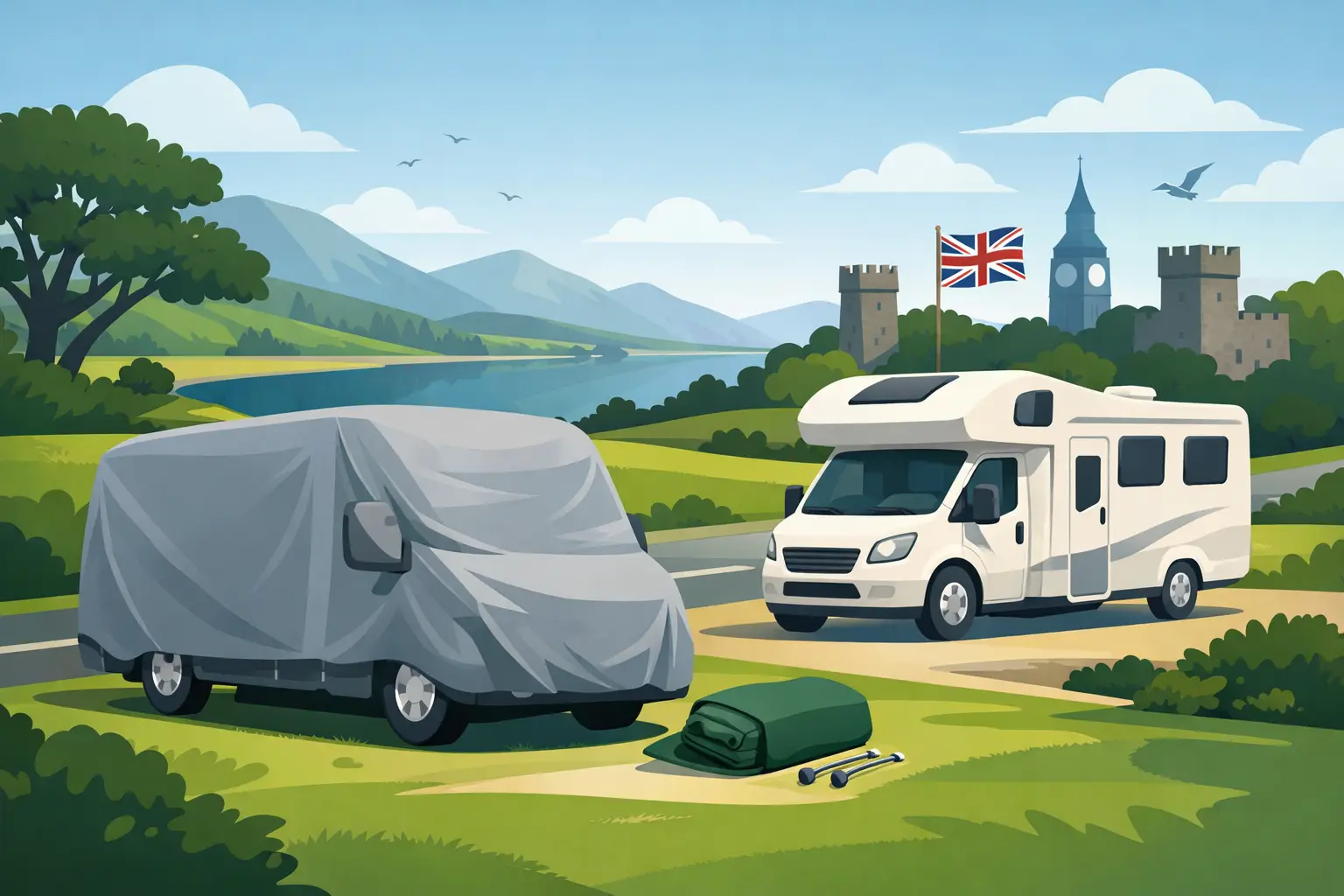
A fitted outdoor cover can help shield a parked motorhome from dirt, bird droppings and UV exposure, but it is not a replacement for insurance. In fact, a poorly fitted cover can trap moisture or rub against paintwork in windy conditions. If you use one, select a breathable design made for your vehicle’s dimensions and follow the manufacturer’s fitting advice.
Tell your insurer about any security or storage measures when asked, but do not assume a physical cover lowers the premium. Insurers tend to focus more on the location, access control and theft-prevention measures in place.
The right policy gives you confidence to plan the next pitch, ferry crossing or long weekend away. Take a few extra minutes to check the wording now, and you are far less likely to face an unwelcome surprise when your motorhome needs protecting most.