
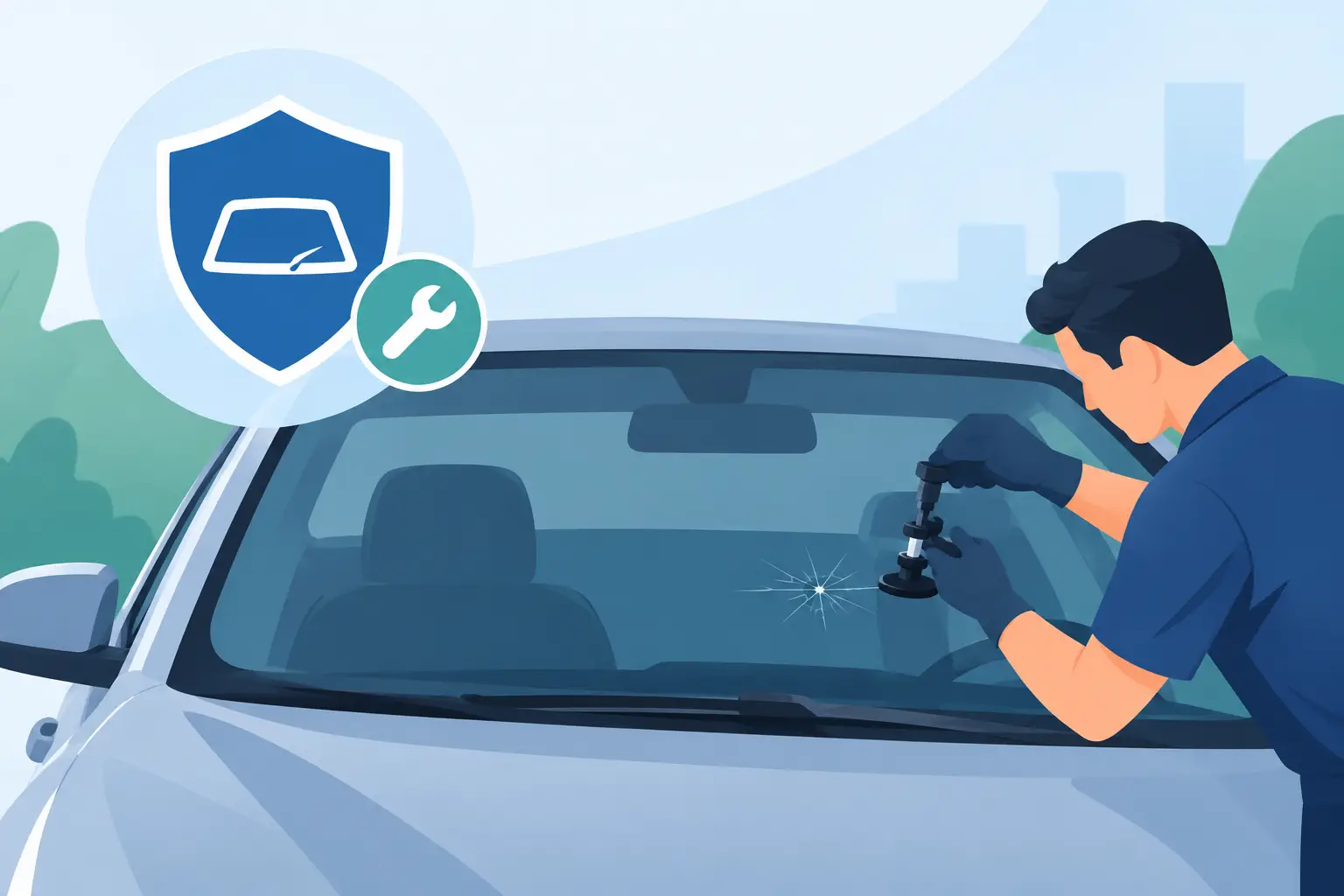
A stone flicked up by the vehicle ahead can leave a tiny chip that quickly becomes a cracked windscreen. So, does windscreen cover include repairs? Often, yes – but the answer depends on the policy type, the damage, your excess and the insurer’s repair process. Checking the details before arranging work can prevent an avoidable bill and help you choose the quickest route back on the road.
Does windscreen cover include repairs with car insurance?
Most comprehensive car insurance policies include windscreen cover as a standard feature or optional extra. This commonly pays for the repair or replacement of the front windscreen, rear window and side windows when they are damaged accidentally.
A repair is usually covered where a chip is small enough and is in a suitable place on the glass. Insurers prefer repair where possible because it is cheaper, faster and keeps the original factory-fitted screen in place. You will normally pay a lower windscreen repair excess than the excess charged for a replacement. Some policies offer chip repair with no excess at all.
However, cover is not universal. Third-party only and third-party, fire and theft policies do not usually include windscreen damage. With comprehensive cover, the exact limits still vary. Read your policy schedule and wording, rather than assuming every fully comprehensive policy provides the same benefit.
When can a windscreen be repaired?
A glass specialist will assess the chip before work begins. The size, depth, location and number of chips all matter. A small impact chip away from the driver’s main viewing area may be repaired in around half an hour. The technician injects a clear resin into the damaged area, then cures and polishes it to restore strength and improve visibility.
Replacement may be necessary if the glass is cracked, the damage reaches an edge, the chip is too large or deep, or it sits directly in the driver’s line of sight. A repair can leave a slight mark, even when completed properly, so safety and clear vision come first.
Do not wait for a chip to spread. Temperature changes, potholes, door slams and normal vehicle vibration can turn a repairable mark into a crack. Covering the area with a clean piece of clear tape can stop dirt and water entering temporarily, but it is not a substitute for getting the glass inspected.
Damage in the driver’s view
Insurers and repairers take damage in the driver’s primary field of vision particularly seriously. Even a modest chip can be unsuitable for repair if it could distort what you see through the screen. This is also relevant at MOT time. A damaged windscreen may lead to a failed MOT if it seriously obstructs the driver’s view or is likely to cause the glass to fail.
What will you pay for a windscreen claim?
Your policy’s windscreen excess is the amount you contribute towards the work. It is separate from the standard compulsory and voluntary excess that applies to many accident claims.
For example, a policy could have a £25 windscreen repair excess and a £100 replacement excess. If the approved repair costs £90, you pay £25 and the insurer pays the balance. If the screen must be replaced, you pay the higher replacement excess. The figures are examples only – check your own documents, as excess levels can differ widely.
Using the insurer’s approved glass provider is usually the most cost-effective option. If you choose your own repairer, your insurer may limit what it pays, require you to pay first and claim back later, or decline to cover the work if authorisation was needed. This matters even more for vehicles with specialist glass, heated screens, heads-up displays or built-in sensors.
Will a windscreen repair affect your no-claims discount?
A windscreen-only claim will not usually reduce your no-claims discount. That is one reason drivers should not automatically pay privately for an eligible repair. But “usually” is not “always”. Insurers set their own rules, and a claim may still be recorded on your claims history or need to be disclosed when you seek future quotes.
Ask two clear questions before proceeding: whether the repair will affect your no-claims discount, and whether you must declare the claim at renewal or when changing insurer. The answer can help you compare the insured route against paying for a minor chip yourself.
A claim for damage caused during a wider road traffic accident is different. If the windscreen is damaged as part of a collision, the insurer may handle it under the main accidental-damage section of the policy instead. In that case, your normal policy excess and no-claims discount rules could apply.
Modern windscreens can make replacement more complex
A windscreen is no longer just a piece of glass. Many newer cars and vans have cameras and sensors behind it for automatic emergency braking, lane support, adaptive headlights or rain-sensing wipers. These advanced driver assistance systems, often called ADAS, may need recalibration after a replacement.
A good approved repairer will identify this requirement and arrange recalibration where needed. Do not be tempted to use the cheapest unverified replacement simply because the initial price looks attractive. Incorrect fitting or failed camera calibration can compromise safety features, create warning lights and cause problems later.
The same principle applies to vans. A working vehicle is essential to many tradespeople, so speed matters, but the right replacement glass and proper sensor setup matter too. Tell the insurer or repairer if your van has a heated screen, roof-mounted equipment, a dash camera or any modifications that could affect access or calibration.
What is not normally covered?
Windscreen cover is designed for sudden, accidental damage. It does not normally pay for wear and tear, gradual deterioration, scratched glass that does not affect safety, or pre-existing damage that occurred before the policy started.
An insurer may also refuse a claim where the vehicle has been deliberately damaged by the policyholder, where policy conditions have been breached, or where the damage is linked to an excluded event. If vandalism is involved, report it honestly and follow the insurer’s claims instructions. Do not describe the cause as a stone chip if you do not know what happened.
There can also be restrictions around non-standard or luxury glass. A replacement may be limited to equivalent standard glass, or the insurer may ask you to contribute towards an upgrade. This is worth checking if your vehicle has tinted, acoustic or particularly specialist factory glass.
What to do after you spot windscreen damage
Start by taking a clear photo of the chip or crack, plus a wider photo showing its position. This gives you a record in case the damage spreads before the appointment. Avoid blasting the demister directly onto a cold, damaged screen, and avoid pressure washing the affected area.
Then check your policy documents for the windscreen section. Look for the repair and replacement excess, the approved provider’s process, any limit on claims, and whether you need permission before arranging work. Contact the insurer or its nominated glass company before booking a repairer yourself.
Have your registration number, policy number and the location of the damage ready. You may also be asked whether the windscreen has cameras or sensors. A mobile technician can often complete a chip repair at home or work, which can be particularly useful if you rely on your car or van every day.
Compare cover details, not only the headline price
A low annual premium can be appealing, but it is sensible to compare the details that matter when something goes wrong. Windscreen cover is a good example: one policy may offer a low repair excess and a higher replacement excess, while another may set different limits or only include glass cover as an extra.
When comparing car or van insurance, check the level of windscreen excess, whether approved repairs are mobile, how ADAS recalibration is handled and the no-claims discount rules. UKcompare helps drivers compare quotes from a wide range of UK insurers, so you can weigh price alongside the cover that suits your vehicle and budget.
Before a small chip has time to become an expensive replacement, check your policy, photograph the damage and speak to the approved repairer. Acting early often gives you the best chance of a simple repair, a lower excess and less time off the road.