
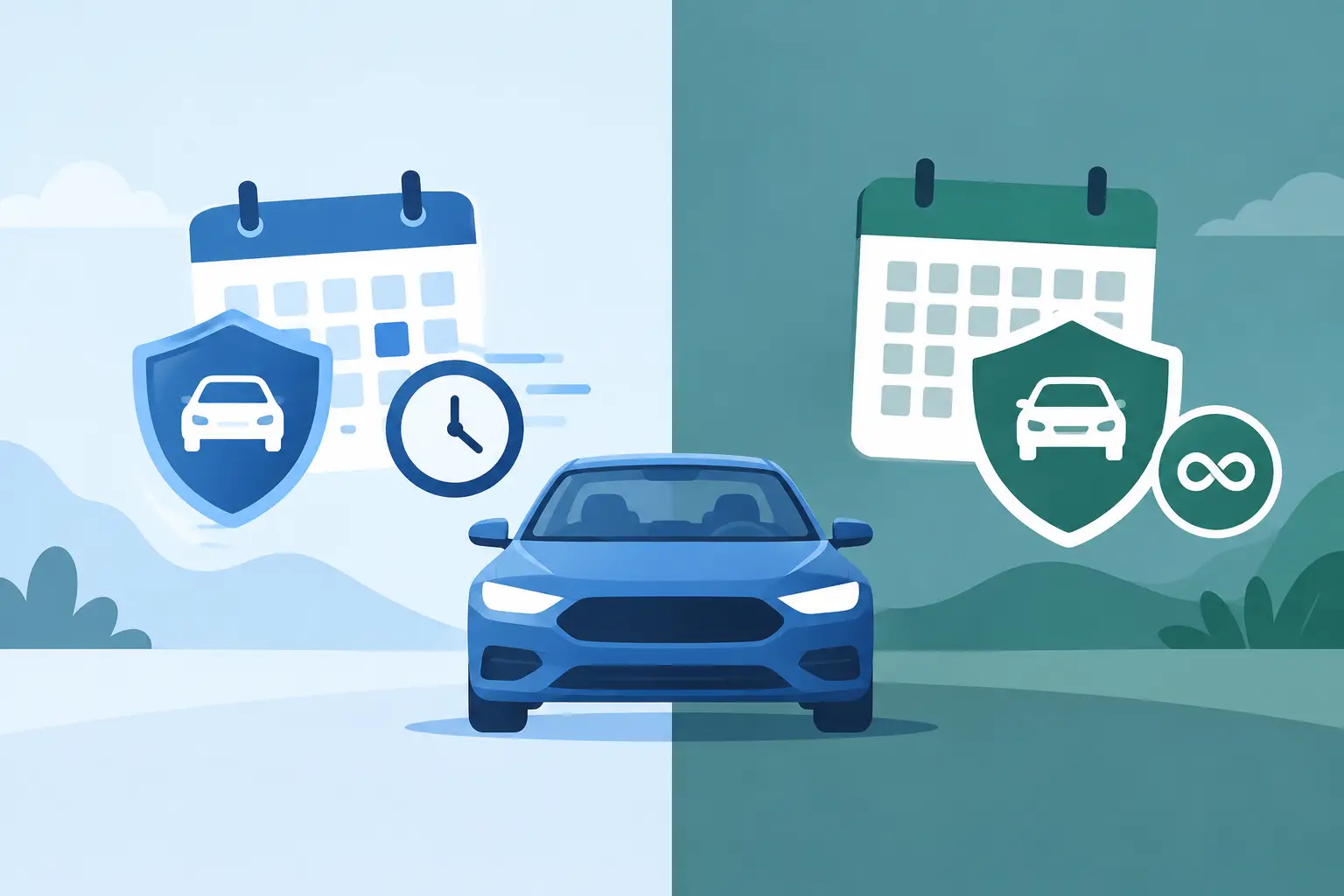
Borrowing a family member’s car for a weekend, test-driving a purchase or covering a few weeks between policies can make short-term cover look like the obvious answer. But temporary versus annual car insurance is not simply a question of how long you need to drive. The cheaper and safer choice depends on the vehicle, your driving pattern, the cover required and whether the car needs to remain insured when it is parked.
Temporary versus annual car insurance: the key difference
Temporary car insurance, often called short-term car insurance, is designed for a defined period. Depending on the provider, cover may be available from a few hours up to several days or weeks. It can suit drivers who need fully comprehensive cover for a brief, specific reason without taking out a full 12-month policy.
Annual car insurance covers you for a year, provided you keep up with the policy terms and payments. It is generally the practical option for a car you own and use regularly, whether that means a daily commute, school runs, shopping trips or occasional weekends away.
The important point is that temporary cover is usually a separate policy. If you borrow someone else’s car, a short-term policy in your own name may allow you to drive without being added permanently to the owner’s insurance. A claim on your temporary policy would normally be handled against that policy, rather than automatically affecting the owner’s no-claims discount. Check the wording carefully, as every insurer’s rules and excesses can differ.
When temporary cover can make sense
Short-term insurance is built for flexibility, not for being the lowest-cost option over a long period. It can be useful when the alternative is changing another person’s annual policy for a short spell, or when you need cover quickly and only once.
Common situations include borrowing a parent’s car while yours is in the garage, sharing driving on a long journey, collecting a newly bought car, or driving a vehicle while visiting family. It may also help a learner driver practise in a parent’s vehicle, where the provider accepts learners and an appropriate supervisor is present.
Temporary cover can be particularly appealing for a borrowed car because it keeps the arrangement clear. You are insured for the agreed dates, and the owner does not necessarily need to add and later remove you as a named driver. That said, do not assume all short-term policies include every use. Commuting, business use, carrying goods or driving abroad may be excluded or require a different policy.
A temporary policy is also not a workaround for an existing insurance problem. If you have had a policy cancelled, have motoring convictions or need specialist cover, eligibility and price may be affected. Answer every question accurately. Getting a quick quote is useful, but correct information is what makes the cover valid when you need it.
Check the vehicle’s own insurance status
A temporary policy may insure you to drive, but it does not always remove the registered keeper’s responsibilities. In the UK, a vehicle that is kept on the road generally needs continuous insurance unless it has been declared SORN. If the owner has cancelled their annual policy, make sure the vehicle can legally be kept and used as intended.
You should also check that the car is taxed, has a valid MOT where required, and is roadworthy. Insurance does not make an unroadworthy vehicle legal to drive.
When annual car insurance is likely better value
If you drive the same car most weeks, annual insurance is usually the more sensible route. One yearly policy avoids repeatedly arranging cover, and its price is generally lower than buying several temporary policies across the year.
Annual cover can also be simpler if you need a broader range of use. Many drivers need commuting included, while others may need business use for travelling between workplaces or visiting clients. If you have a partner or family member who drives the car regularly, adding them as a named driver may be more practical than arranging short policies again and again.
There is another long-term consideration: no-claims discount. A full annual policy may allow you to build a no-claims bonus if you complete the policy year without making a claim, subject to the insurer’s rules. Temporary policies do not usually build this discount. For a new driver or anyone trying to establish a better insurance record, that could matter more than a small short-term saving.
Paying annually can sometimes reduce the overall cost compared with monthly instalments, because monthly payments may include interest. It is worth comparing both options against your budget rather than assuming the smallest monthly figure is the cheapest way to insure your car.
Compare the real cost, not just the headline price
A one-day or one-week temporary policy can look affordable because the total price is lower than an annual premium. That does not mean it represents better value. If you need cover for several separate weekends, a month or more, or regular use throughout the year, add up the total before deciding.
For example, someone borrowing a car twice a month may find that repeated temporary policies soon cost more than being added to the owner’s policy or arranging their own annual cover. On the other hand, paying to add an inexperienced driver to an annual policy can increase the owner’s premium significantly. There is no universal winner.
Look beyond price at the excess too. The compulsory excess is the amount you agree to pay towards a claim, and you may choose a voluntary excess on top. A low premium with a high total excess could be poor value if a minor accident would leave you with a large bill.
Also compare the policy details that affect day-to-day use:
- the exact start and end time of cover;
- the level of cover and any exclusions;
- the driver’s age, licence and residency requirements;
- whether commuting, business use or motorway driving is permitted;
- the excess, cancellation terms and claims process.
Do not rely on driving other cars cover under an existing annual policy. Where it is included, it is often third-party only, may be limited to the policyholder and is not intended as a replacement for insuring a borrowed vehicle. Read your certificate and policy wording before driving.
A quick way to choose the right cover
Start with the simplest question: how often will you drive this car in the next 12 months? For a one-off collection, holiday visit or emergency, temporary cover may be the neatest option. For regular driving, annual cover normally offers stronger value and less admin.
Next, consider whose car it is. If it is your own car and you keep it on the road, annual insurance will usually be the natural choice. If it belongs to a friend or relative and you only need it for a short, agreed period, temporary cover can protect both sides from unnecessary changes to the main policy.
Finally, compare like for like. Enter the same accurate driver and vehicle information, check the cover level, and do not select a policy only because it is the cheapest at first glance. The right policy is one that covers the journey you actually need to make, at a price you can afford, with terms you understand.
UKcompare can help you compare car insurance quotes quickly across a wide panel of registered UK insurers, so you can weigh up annual cover when it is time to protect your everyday car. Who Compares Wins!
Before you pick up the keys, check the dates, permitted use and excess once more. A few minutes spent confirming the detail can save far more than chasing the lowest headline premium.