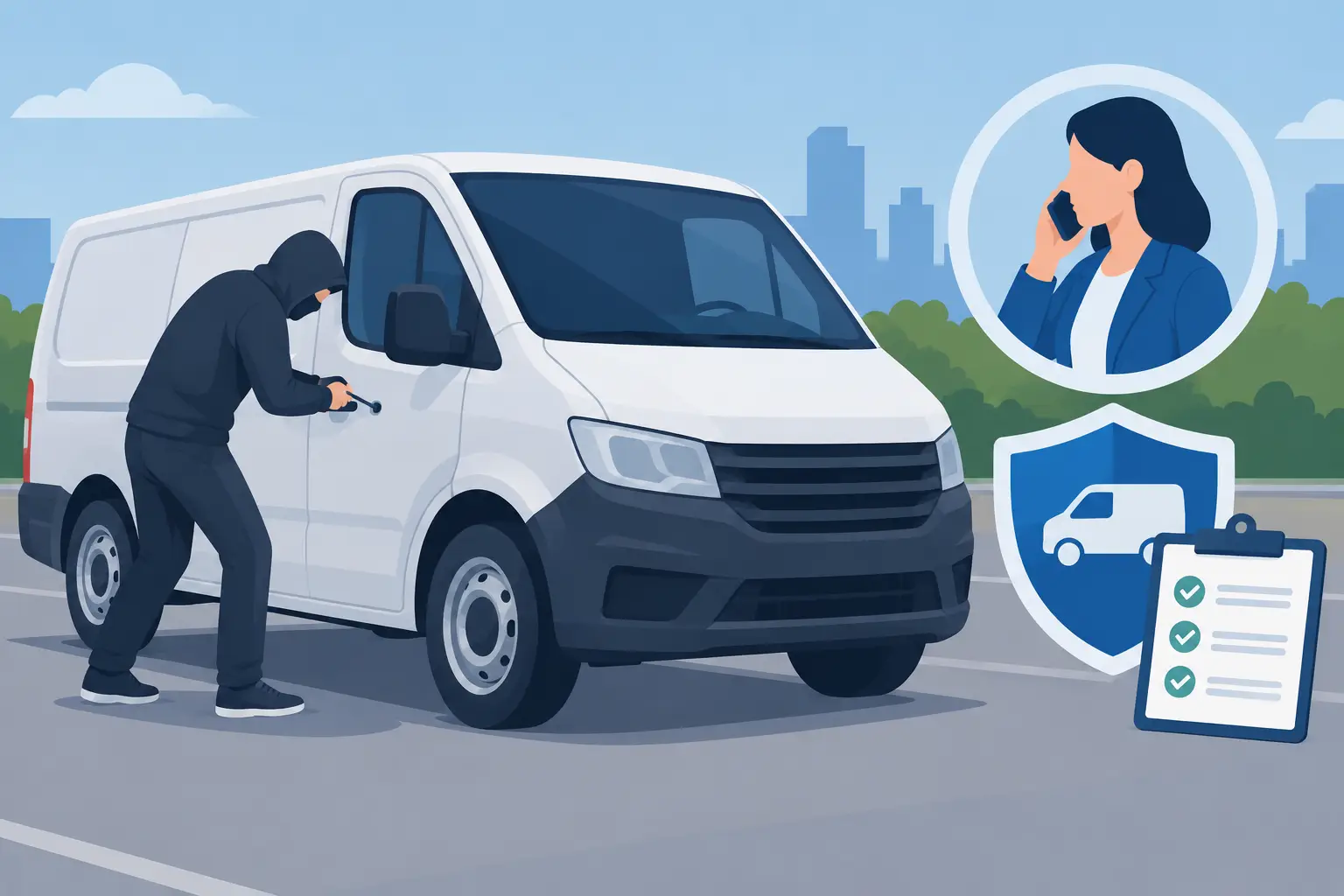
A stolen van can stop work immediately. Whether it carries tools, stock or is simply your way to get from job to job, the priority is getting safe, reporting the crime and starting your van theft claims process without delay. Acting quickly will not guarantee an instant payout, but it can prevent avoidable hold-ups and give your insurer the information it needs.
What to do when your van is stolen
First, check that the van has not been moved, clamped or recovered by a local authority. If it is genuinely missing, contact the police on 101, or use 999 only if the theft is in progress or there is an immediate danger. Ask for a crime reference number. Your insurer will normally need it before it can progress a theft claim.
Then call your insurer’s claims line as soon as you can. Do not wait for every detail to be perfect. Tell them when and where you last saw the van, who had the keys, whether it was locked and whether any tools or personal belongings were inside. Keep a note of the date, time and name of the person you speak to.
You should also let relevant parties know where necessary. This could include your leasing company, finance provider, employer, customers with booked work, or a vehicle tracking company. If the van has a tracker, contact the provider immediately. A quick response can sometimes help police locate the vehicle before it is stripped, damaged or moved on.
Avoid posting detailed information about the theft on social media while the matter is being investigated. Public posts can create confusion, attract unhelpful speculation and, in some cases, alert criminals to valuable items you own.
Does van insurance cover theft?
It depends entirely on the cover you bought. Comprehensive van insurance normally includes theft cover. Third party, fire and theft policies also usually cover theft of the insured vehicle. Third party-only insurance does not cover your own van if it is stolen.
Even where theft is covered, the policy wording matters. Insurers will check that the policy was active, that the van was being used for an insured purpose and that you took reasonable care of it. They may also ask whether keys were left in or near the vehicle, whether doors and windows were secured, and who was driving or using the van at the time.
Tools, equipment and stock are a separate issue. Some policies include a limited amount of cover for tools kept in the van, while others exclude them unless you selected an add-on or specialist cover. Do not assume that the van’s insurance protects everything inside it. Check your schedule for limits, exclusions and any requirement to use a lockable storage box or approved alarm.
If you use your van for work, be particularly careful about the declared use. Carrying your own tools is not always the same as delivering goods, transporting customers’ property or using the vehicle for courier work. A mismatch can make a straightforward claim much harder.
How van theft claims are assessed
After you report the theft, the insurer will open a claim and may ask for documents and evidence. This is routine. The more clearly you can provide the requested information, the sooner the claim can move forward.
You may be asked for your crime reference number, driving licence, V5C log book, purchase receipt, finance agreement, service history and both sets of keys. If you have photos of the van and its condition, send copies. For tools or equipment, gather receipts, serial numbers, photographs, bank statements or invoices that show ownership and value.
The insurer will also establish the van’s pre-theft market value. This is not necessarily what you paid for it, what remains on finance, or the cost of buying an equivalent van from a dealer. It is usually based on the vehicle’s age, mileage, specification, condition and current UK market prices immediately before the theft.
That can feel disappointing when used-van prices are high. If you believe the valuation is too low, ask how it was reached and provide comparable adverts for vans with the same registration year, mileage, condition and specification. Advertised prices are not always sale prices, but well-matched evidence can support a review.
Most theft claims include an excess. This is the amount you agreed to pay towards a claim when taking out the policy. If the van is recovered with repairable damage, the excess is normally deducted from the repair settlement. If it is not recovered and the insurer pays the market value, the excess is generally deducted from that payment.
What happens if the van is recovered?
A stolen van is often found before a final settlement is agreed. The police or insurer will arrange recovery and inspection, then assess its condition. If it is safe and economical to repair, the insurer may authorise repairs through an approved repairer or discuss alternatives with you.
Do not collect or drive a recovered van without speaking to your insurer first. It may need forensic examination, and hidden damage can affect its roadworthiness. Check carefully for missing tools, altered locks, damaged ignition components, body damage and signs that personal details or documents were left inside.
If the van is recovered after you have accepted a total-loss payment, ownership may already have transferred to the insurer. In that situation, contact the claims handler rather than making arrangements yourself.
Why a claim can take longer than expected
The waiting period is often frustrating, especially when work depends on the van. Insurers may wait for a set period to see whether the vehicle is recovered, then need time to verify ownership, value and policy details. Police enquiries, outstanding finance and missing documents can add further delays.
You can help by responding promptly, keeping copies of everything you send and asking your claims handler what is outstanding. If you need a replacement vehicle, check whether your policy includes courtesy van cover following theft. This is not standard on every policy, and a courtesy vehicle may be a small car rather than a like-for-like working van.
If you have finance on the vehicle, any settlement may be paid to the finance company first. Where the settlement is lower than the outstanding balance, you could still owe money. Guaranteed asset protection, often called GAP insurance, may help in some circumstances, but only if you already have suitable cover in place.
Reducing the chance of another theft
No security measure makes a van impossible to steal, but visible and layered protection can make it less attractive and can reduce the opportunity for opportunist theft. Consider where the van is parked overnight, especially if it is regularly left on a driveway or roadside with tools inside.
Useful measures include:
- A Thatcham-approved alarm, immobiliser or tracking system.
- A steering-wheel lock, pedal lock or gearstick lock as a visible deterrent.
- Additional deadlocks or slamlocks on load-area doors.
- Secure tool storage fixed inside the van, with tools removed overnight where practical.
- Security lighting, CCTV or a locked garage at home or your business premises.
- Keyless-entry protection, such as a signal-blocking pouch, if your van is vulnerable to relay theft.
Security can sometimes affect the price of cover, but it is not automatic. An insurer may only recognise certain approved devices, and modifications should always be declared. The bigger benefit is reducing the likelihood and impact of a theft in the first place.
Compare cover before renewal
A theft claim can affect future premiums, particularly if you lose a no-claims discount. That does not mean you should simply accept your renewal price. Compare the cover, excess, tool protection, courtesy-vehicle terms and security requirements as well as the headline premium.
UKcompare lets van owners compare quotations from a wide range of registered UK insurers, helping you weigh up price and protection without visiting multiple insurer sites. Be accurate about previous claims, vehicle use, overnight parking and security devices. A cheaper policy is only good value if it fits the way you actually use your van.
After a theft, focus on the next practical step rather than trying to solve everything at once: get the crime reference number, notify your insurer and keep your evidence organised. When it is time to insure your replacement or renew your cover, comparing carefully gives you a better chance of finding protection that works as hard as your van does.