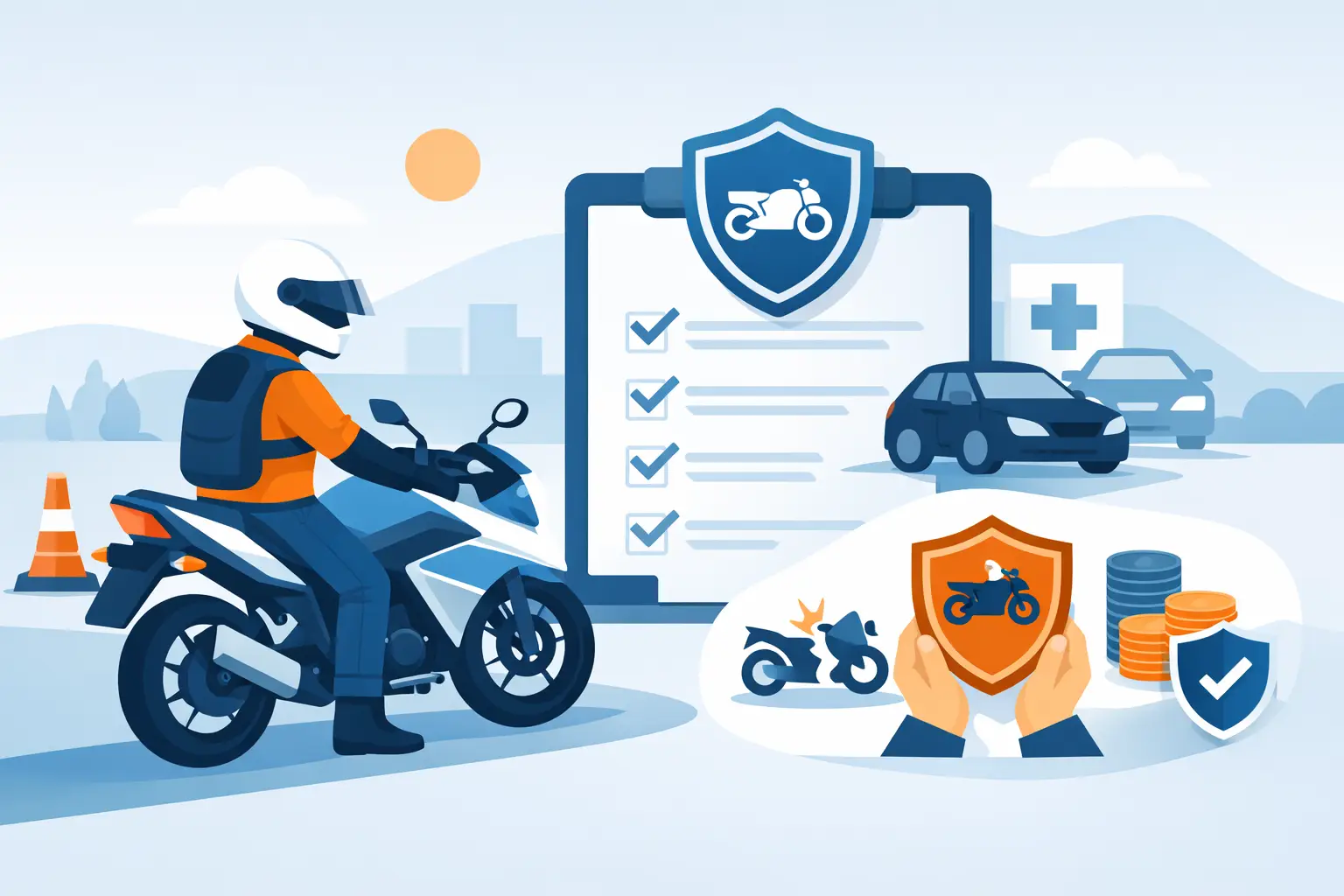
Your first ride home after completing CBT should feel exciting, not like a last-minute scramble for cover. Motorbike insurance for learners is a legal requirement before you use your bike on the road, but the cheapest-looking quote is not always the policy that suits how, where and when you will ride.
Learner riders can face higher premiums because they have less road experience and are statistically more likely to make a claim. That does not mean you should accept the first price you see. The details you give, the bike you choose and the cover level can all make a meaningful difference.
What learner motorbike cover needs to do
There is no single policy type reserved only for learners. In most cases, you take out a standard motorbike policy and declare that you hold a provisional licence and have completed CBT, where required. The insurer needs an accurate picture of your entitlement, riding history and intended use.
At the very least, UK law requires third-party insurance. This covers injury or damage you cause to someone else, but not repairs to your own bike if you are at fault or it is stolen. Third party, fire and theft adds protection if the motorcycle is stolen or damaged by fire. Comprehensive insurance can also cover accidental damage to your own bike, subject to the policy terms and excess.
Comprehensive cover is often assumed to be the most expensive option. Sometimes it is, but not always. Insurers price risk differently, so it is worth comparing all suitable cover levels rather than ruling one out on the name alone.
Make sure your licence details are right
A learner may be riding on a provisional licence after passing CBT, typically on a machine within the relevant learner limits. For many new riders, that means a moped or a motorcycle up to 125cc and 11kW. You must display L plates, or D plates in Wales, and cannot carry a passenger or use motorways while riding as a learner.
These rules matter to insurance. If you select a full licence when you only hold provisional entitlement, or say you have passed a practical test when you have not, the quote may be invalid. A lower price gained through incorrect information can become very expensive if you need to claim.
Also tell the insurer if your CBT is due to expire. A CBT certificate normally lasts two years, and you need valid entitlement whenever you ride. Insurance does not replace the need to meet licensing rules.
Choosing cover for your first bike
The right cover depends on what you could afford to lose. A low-value, older 125cc bike may make third party, fire and theft a sensible option for some riders, particularly if it is stored securely. If replacing or repairing the bike would be difficult, comprehensive cover may offer more reassurance.
Look beyond the headline premium. Check the compulsory excess and voluntary excess, which are the amounts you may need to pay towards a claim. Choosing a higher voluntary excess can reduce the premium, but only select an amount you could genuinely pay after an accident or theft.
It is also sensible to check whether the policy includes or offers:
- cover for your helmet, jacket and other riding gear;
- roadside recovery and onward travel;
- a courtesy bike following an insured incident;
- commuting use if you will ride to work, college or an apprenticeship; and
- cover for riding other bikes, although this is uncommon for learners and should never be assumed.
Add-ons can be useful, but only if they solve a real problem for you. A rider using a bike solely for short local journeys may place more value on theft protection than on broad breakdown cover. Someone relying on their bike to get to work may make the opposite choice.
What affects motorbike insurance for learners?
Insurers assess the overall risk, not just your age. The motorcycle itself has a major effect. A modest, standard 125cc bike is often cheaper to insure than a model with a high theft rate, costly parts or performance modifications. Before buying a bike, getting an indicative quote can prevent an unpleasant surprise later.
Your postcode and overnight parking arrangements matter too. A motorcycle kept in a locked garage may attract a different price from one left on the road overnight. Be precise when answering this question. Calling a shared car park a driveway, or saying a bike is garaged when it is usually on the street, could cause trouble at claim time.
Mileage is another area where accuracy helps. Estimate your annual distance honestly, including regular journeys, weekend rides and travel to training. Lower mileage can reduce a premium, but deliberately understating it is not a saving. If your circumstances change significantly during the year, tell your insurer.
Claims, convictions and modifications must be declared. A phone mount or security device may be straightforward, while performance parts, exhaust changes and cosmetic alterations can affect the insurer’s decision. Ask before fitting anything if you are unsure. The same applies if another person will ride the bike – they need to be named or separately insured, depending on the arrangement.
Security can protect your bike and your premium
Motorcycle theft is a real concern, particularly for lighter learner bikes that can be moved quickly. A quality chain and lock, ground anchor, disc lock, alarm, tracker or secure garage can make your bike harder to take. Some insurers may recognise approved security measures in their pricing, but do not buy equipment purely for a discount.
More importantly, use the security you declare. If a policy requires an approved lock when the bike is left unattended, failing to use it could affect a theft claim. Keep receipts, photographs and serial numbers for your bike and security equipment where possible.
How to seek a better-value quote
Start your search before the day you need cover. Buying at the last minute can limit your options, while arranging a policy a little in advance may produce a better choice of prices. Do not leave yourself uninsured while collecting a newly bought bike – road tax, a valid licence and insurance all need to be in the place.
Compare like for like. A quote with a lower annual premium may have a much larger excess, fewer benefits or restrictions that do not fit your riding. Choose the same cover type, mileage and usage where possible, then compare the policy details as well as the price.
Paying annually is often cheaper overall than monthly instalments because monthly payments can include interest or finance charges. However, the annual payment only makes sense if it is affordable without putting pressure on your budget. A policy that lapses because payments cannot be met is not a good deal.
Consider the bike carefully before you buy it. A well-maintained, unmodified model with readily available parts may be easier to insure than a rare or heavily customised alternative. Passing your theory and practical tests can also broaden your options over time, although a full licence does not guarantee an immediate premium reduction.
If you are comparing through UKcompare, enter your details consistently and truthfully, then give each result a quick policy check before proceeding. Fast quotes are useful, but the aim is appropriate cover at a competitive price, not simply the lowest number on the screen.
Common mistakes learner riders can avoid
The biggest mistake is assuming a policy automatically covers every journey. Social, domestic and pleasure use does not necessarily include commuting. Riding to a part-time job, college placement or regular workplace may need to be declared, even if the journey is short.
Another is overlooking cancellations. If you sell the bike, stop riding or pass your test and need different cover, contact the insurer rather than cancelling a direct debit and hoping the policy ends. Cancellation fees, refunds and changes to your licence status vary by provider.
Finally, avoid treating no-claims discount as guaranteed. Many policies let riders build a no-claims record, but rules vary, especially where a policy has been cancelled or a claim has been made. Keep your renewal documents and proof of no-claims discount for future quotes.
A learner policy is not just a box to tick before riding away. Take a few extra minutes to match the cover to your bike, your parking and your real journeys. That gives you a stronger chance of finding value now, while building the riding experience that can help you later.