A £1,500 commuter bike can sometimes cost more to insure than a pricier machine parked a few streets away. That is because what affects motorbike insurance price is not just the value on the advert. Insurers look at the combined risk of the rider, motorbike, where it is kept and how it will be used.
Knowing what sits behind a quote can help you give accurate details, choose cover that suits your needs and spot sensible ways to reduce the premium. The aim is not simply to find the cheapest policy, but to get suitable protection at a competitive price.
What affects motorbike insurance price most?
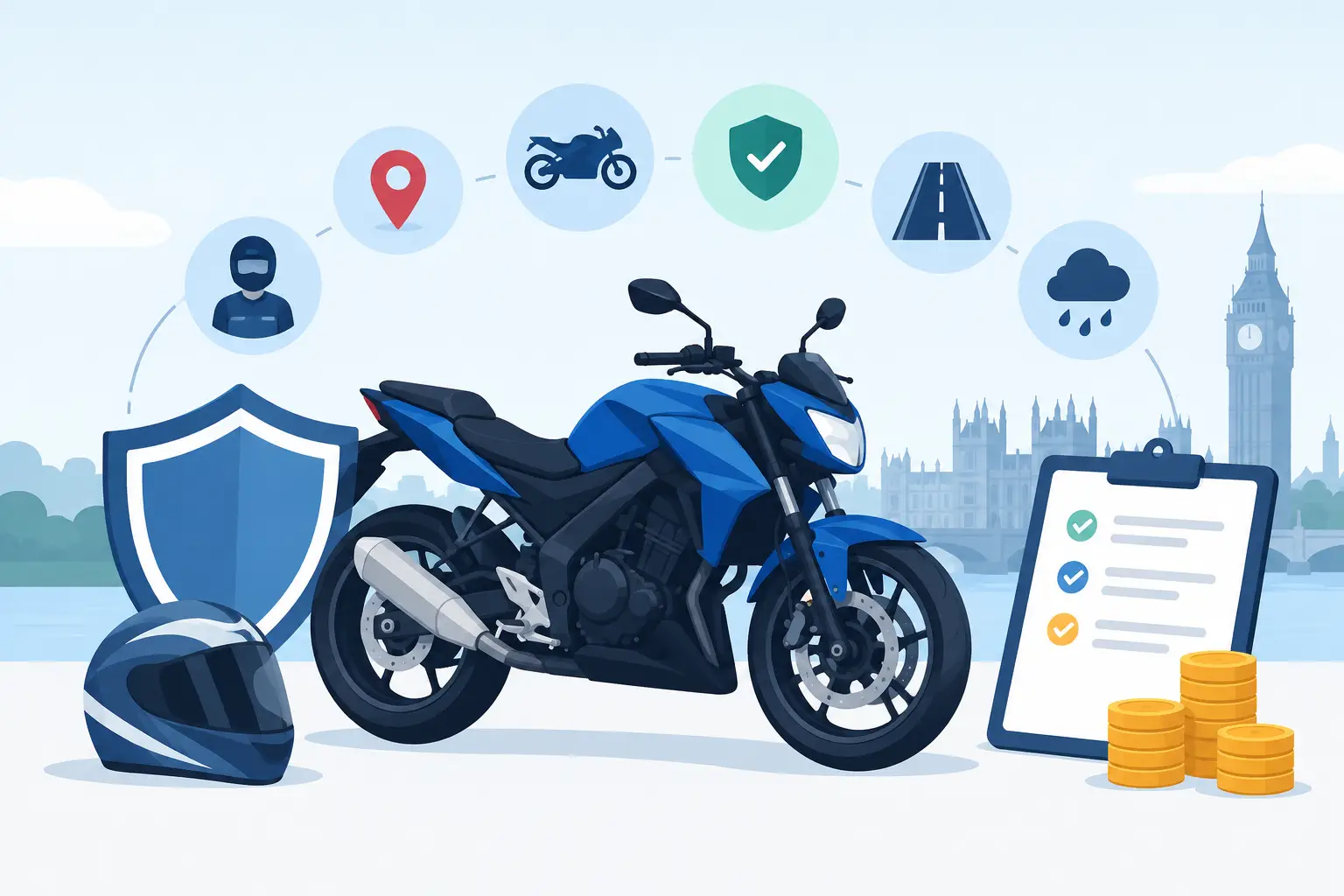
Every insurer has its own rating system, so two quotes can differ even when the policy details look similar. However, the biggest factors tend to fall into a few familiar categories: the bike itself, your riding record, your postcode, security arrangements, intended use and the cover options you select.
A quote reflects the insurer’s view of how likely a claim is, and how much that claim could cost. A lower-risk rider on a modest, securely stored bike may therefore pay less than someone with the same licence but a higher-performance model, regular city commuting and on-street parking.
Your age, licence and riding experience
Newer and younger riders often pay more because they have less time on the road and, statistically, present a higher claims risk. This does not mean every young rider receives the same price. A 21-year-old with a full licence, training and a clean record may be rated differently from someone of the same age riding on a provisional licence.
The type of licence matters too. If you have a CBT certificate, A1, A2 or full category A licence, make sure you select the correct option when getting quotes. Your licence date and any advanced qualifications can also affect the premium. Schemes such as IAM RoadSmart or RoSPA training may be recognised by some insurers, although a discount is never guaranteed.
Your no-claims discount can make a meaningful difference. Building several claim-free years usually improves your options, but check whether a policy accepts no-claims bonus earned on another motorbike, a car or a previous insurer’s policy. These rules vary.
The motorbike you ride
Insurers consider far more than the bike’s purchase price. Engine size, performance, repair costs, theft appeal, availability of parts and likely crash damage can all feed into the calculation. A powerful sports bike may cost more to insure than a lower-powered naked or commuter bike, even if both have a similar market value.
Modifications deserve special attention. Performance upgrades, non-standard exhausts, cosmetic changes and security additions should all be declared if the insurer asks about them. Some modifications may increase the premium, while an approved alarm, tracker or immobiliser could help in some cases. Never assume an upgrade is irrelevant because it was fitted by a previous owner.
Engine size is not the whole story
A larger engine can increase premiums, but it is not a simple rule. A 125cc motorcycle popular with new riders may attract different theft or claims data from a larger touring bike ridden by an experienced owner. Insurers rate the whole model and the rider profile, not the engine alone.
Before buying a bike, run a few indicative quotes using the exact registration where possible. This can prevent a low purchase price turning into an unexpectedly expensive annual policy.
Where you live and park overnight
Your postcode is one of the most influential parts of a motorbike insurance quote. Insurers use local claims data, including theft, vandalism and accident patterns. Higher population density and areas with more recorded bike theft can lead to higher premiums, even when you are an experienced rider.
Overnight storage matters because motorcycles can be easier to steal than cars. A locked garage is often viewed more favourably than a driveway, and a driveway may be rated differently from parking on the road. Be precise: describing a shared underground car park as a private garage, for example, could create problems if you need to claim.
Security can reduce risk, but its effect depends on the insurer and your circumstances. A disc lock, chain anchored to a fixed point, cover, alarm or tracker may be worthwhile for protecting the bike regardless of whether it reduces the quote. Keep receipts, registration details and photographs for any security equipment you rely on.
How you use your motorbike
A bike used for occasional Sunday rides can be rated differently from one used every weekday through rush-hour traffic. When arranging cover, choose the right use category: social, domestic and pleasure; commuting; or business use where available. Commuting needs to be declared if you ride to a regular place of work or use the bike in connection with your job.
Annual mileage also affects motorbike insurance price. More miles mean more time exposed to potential incidents, but estimating unrealistically low mileage is a false economy. If you regularly exceed the figure on your policy, speak to the insurer rather than waiting for renewal. A reasonable estimate based on servicing records, MOT history and typical journeys is the safer approach.
If other people will ride your motorbike, adding them can raise or lower the quote depending on their age, experience and record. Adding an older, experienced rider is not automatically cheaper, and naming someone who is actually the main rider is known as fronting. It can invalidate the policy.
Claims, convictions and insurance history
Previous accidents, theft claims and fault claims can increase premiums, particularly if they are recent. Even a non-fault incident may need to be disclosed because insurers use it as part of their overall assessment. Read each question carefully and answer it exactly as asked.
Motoring convictions, penalty points, licence suspensions and driving bans can also affect the price. The impact depends on the offence, when it happened and the insurer’s underwriting rules. Leaving out information may appear to save money at first, but it can lead to a cancelled policy, refused claim or difficulty arranging cover later.
Gaps in insurance can matter too. If you have not ridden for several years, an insurer may treat you differently from a rider with continuous recent experience. Be ready with the dates of past policies and proof of your no-claims discount where requested.
Cover level, excess and optional extras
Third party only is the legal minimum for riding on UK roads, but it is not always the least expensive option. Comprehensive cover can occasionally cost less because the customers who choose it may have a different overall risk profile. The only reliable way to know is to compare like-for-like cover levels.
Third party, fire and theft protects against your liability to others, plus theft and fire, but generally not damage to your own bike after an accident. Comprehensive cover usually adds accidental damage protection, subject to the policy terms and excess. Consider the value of the bike, how you use it and what you could afford to replace or repair yourself.
The excess is the amount you contribute towards an accepted claim. Choosing a higher voluntary excess can reduce the premium, but only choose an amount you could comfortably pay alongside any compulsory excess. Saving £30 on the policy is poor value if an unaffordable excess stops you claiming after a crash.
Optional extras can change the total price as well. Breakdown cover, legal expenses, helmet and leathers cover, roadside recovery and protected no-claims discount may be useful, but their value depends on what you already have and how you ride. Check limits, exclusions and whether an extra duplicates another service.
Practical ways to keep the premium competitive
Accurate information is the starting point. Insurers need the correct registration, address, occupation, mileage, licence details, claims history and storage arrangements. Small inaccuracies can produce a misleading low quote that changes later.
It also pays to compare policies on more than the headline premium. Check the compulsory and voluntary excess, cover for theft, pillion passengers, legal requirements for security, European riding if relevant, replacement bike provision and any restrictions on modifications. A cheaper policy with a large excess or limited theft cover may not represent the better deal.
Buying in good time can help too. Leaving insurance until the day cover is needed can reduce your choices. Start checking prices before renewal, then review the quote details again before you buy. Avoid auto-renewing without looking at the market, particularly if your circumstances or bike have changed.
UKcompare lets riders compare motorbike insurance quotes from a broad panel of registered UK insurers, helping you weigh up price and policy features without visiting insurer after insurer. Who Compares Wins!
Your premium will never be based on one detail alone, but the choices within your control can add up. Keep your information honest, protect the bike properly, select cover you would genuinely rely on and compare before committing. That gives you the best chance of finding motorbike insurance that works for your riding and your budget.