A five-year no-claims discount can make a meaningful difference to the price of your next car or van policy. That is why the question, when does no claims expire, matters if you have stopped driving, sold a vehicle, moved abroad or simply had a gap between policies.
For many UK insurers, no-claims discount (NCD), also called no-claims bonus (NCB), usually expires after two years without a policy in your name. But this is not a universal rule. Each insurer sets its own acceptance criteria, and a gap of just over two years can mean a discount that took years to build is no longer accepted.
When does no claims expire under UK insurer rules?
The most common position is that insurers will accept proof of no claims that is no more than two years old. If your previous policy ended on 1 June 2024, many insurers would expect you to start a new policy by 1 June 2026 to use that discount.
However, insurers do not all work to exactly the same deadline. Some may accept an NCD that is up to three years old, while others may require it to be less than two years old. A few can be stricter depending on the type of cover, your claims history, or whether you are insuring a car, van, motorbike or motorhome.
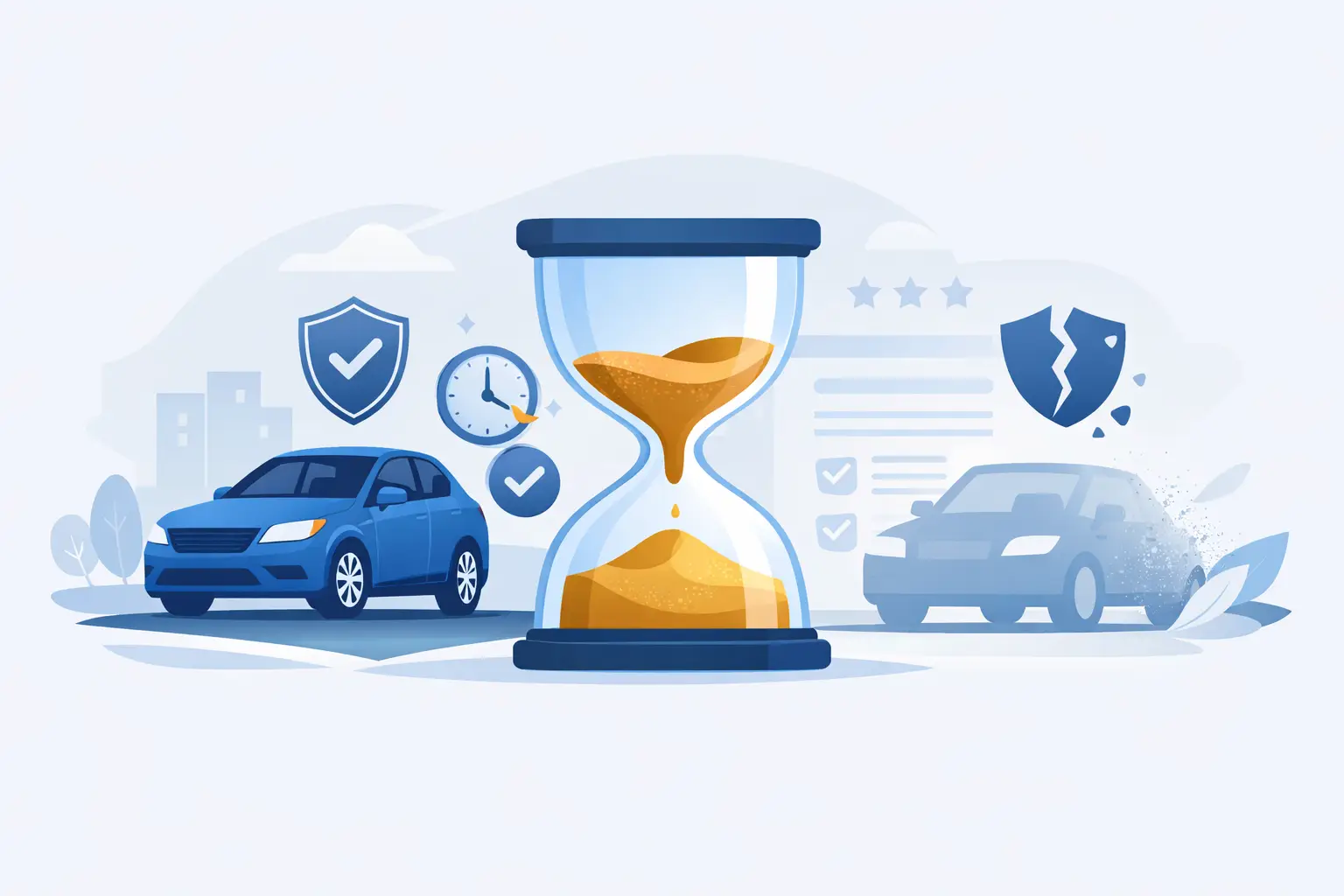
The key point is that your no-claims discount does not usually vanish the moment you cancel a policy. It normally has a limited shelf life. Once that time passes, an insurer may quote as though you have no usable NCD, even if you drove claim-free for many years before the break.
The date that usually matters
Insurers generally look at the date your last policy ended, not the date you last drove. If you cancelled cover after selling your car, the clock normally starts from the cancellation or expiry date shown on your proof of NCD.
That proof is often valid for a limited period too. A renewal notice might show your current NCD, but a new insurer may ask for a dedicated proof-of-no-claims letter or document from your former provider. Check the end date and the issue date before arranging cover.
What happens if your no-claims discount has expired?
If an insurer will not accept your previous NCD, you may need to take out cover with zero years’ no-claims discount. This does not mean you have done anything wrong or that you must pay the highest possible premium. It does mean you lose one of the discounts that insurers commonly use when calculating a price.
Your premium will still reflect many other factors, including your age, postcode, vehicle, annual mileage, occupation, driving history, where the vehicle is kept and the level of cover you choose. A driver with an expired NCD can still find competitive cover by comparing policies carefully rather than accepting the first renewal-style price they see.
Do not be tempted to state that you have an active no-claims discount if the insurer’s rules say it has expired. If the provider asks for evidence and you cannot supply acceptable proof, it may amend the premium, remove the discount or, in serious cases, cancel the policy. Accurate answers protect you when you need to claim.
Why a gap in cover can cost you
There are plenty of ordinary reasons for taking time away from driving. You may have used public transport, had access to a partner’s car, worked overseas, retired, or been between vehicles. Van drivers may have stopped trading, changed jobs or no longer needed a vehicle for work.
The difficulty is that a no-claims discount is linked to a policyholder’s claim-free insurance record, not simply to holding a driving licence. Being a named driver on somebody else’s policy may help you keep driving experience, but it usually does not keep your own NCD alive. Some insurers offer named-driver discount schemes, although those discounts are often only recognised by that insurer and cannot necessarily be transferred.
Similarly, company-car driving does not automatically preserve personal NCD. If you have driven a company vehicle without claims, ask your employer or fleet manager for a letter confirming the period of claim-free driving. Some insurers may take it into account, but it is not the same as a transferable personal no-claims bonus and acceptance varies.
Does protected no claims stop it expiring?
No. Protected no claims and an expired no-claims discount are separate issues.
No-claims protection is an optional feature that can allow you to make a certain number of claims without reducing the number of NCD years recorded on your policy. The exact allowance and conditions differ between insurers. It does not mean your premium cannot rise after a claim, and it does not normally extend the time you have to use the discount after your policy ends.
For example, you might have nine years’ protected NCD when you sell your car. If you then go without a policy for longer than the new insurer allows, protection is unlikely to make that old NCD acceptable again. Think of protection as cover for your discount while insured, not a way to store it indefinitely.
Car and van no-claims discounts are often separate
If you have built no claims on a private car policy, do not assume it will transfer directly to a van policy. The same applies in reverse. Some insurers may recognise the experience when pricing the policy, but car and van NCD are commonly treated as separate discounts because the vehicles and their use carry different risks.
This matters particularly if you are changing from employment to self-employment, replacing a car with a van, or returning to a private car after years of van driving. Tell the insurer exactly what discount you hold and where it was earned. It is better to receive a realistic quote than choose a low price based on an NCD that cannot later be verified.
You also cannot usually use the same NCD on two policies at once. If you insure a second car or van, it will normally need its own NCD, unless an insurer provides a specific introductory or mirrored-discount arrangement.
How to avoid losing your no-claims bonus
If you expect a break from owning a vehicle, plan before your current policy ends. Download or request proof of NCD as soon as the policy expires or is cancelled, and save it somewhere you can find easily. Insurers’ online accounts can close after a period, so keeping your own copy is sensible.
If you intend to buy another vehicle soon, avoid unnecessary delay once you are ready to insure it. Starting a new annual policy before the accepted time limit is reached is usually the simplest way to preserve the discount. If you are unsure whether a particular insurer will accept your proof, ask before buying rather than relying on an assumption.
When comparing quotes, enter the number of years exactly as shown on your evidence. Check whether the insurer asks for the date the last policy ended and whether it will accept NCD from your previous vehicle type. A cheap headline price can change if the insurer later rejects the discount.
There are other practical ways to manage the cost if a break in cover has already happened. Choosing a vehicle in a lower insurance group, giving an accurate lower annual mileage figure where appropriate, improving security, considering a sensible voluntary excess and paying annually if affordable can all affect the price. The right option depends on your circumstances: a higher excess may lower the premium, but only choose an amount you could genuinely pay after a claim.
If you are close to the two-year point
Do not leave it until the last minute. Gather your old policy documents, confirm the exact end date and get quotes while there is still time to act. If one insurer will not accept your NCD, another may have different rules, so compare the total cover, excesses and policy features as well as the price.
A no-claims discount is valuable, but it is only one part of finding suitable cover. Check your details carefully, be open about gaps and claims, and compare options that fit how you use your car or van. With quotes from a broad range of insurers, UKcompare can help you spend less time searching and more time choosing cover with confidence – because Who Compares Wins!