A bike can be gone in the time it takes to buy a coffee. That is why motorcycle theft trends matter well beyond the crime statistics: they affect where riders park, which security they choose and, often, the price and availability of motorbike insurance.
For UK riders, theft risk is rarely just about owning an expensive machine. A lightweight 125cc used for commuting can be attractive because it is easy to move and has a ready market for parts. A high-value sports bike may draw attention because resale values are stronger. The practical answer is not to stop riding – it is to make your bike a less convenient target and make sure your cover reflects how, where and when you use it.
What motorcycle theft trends mean for UK riders
Motorcycle theft is often opportunistic, but it is not always random. Thieves commonly look for motorcycles that can be moved quickly, have limited visible security or are regularly left in predictable places. Residential streets, shared parking areas, railway stations and city-centre bays can all present different risks.
One continuing trend is the appeal of smaller, lighter machines. Scooters and 125cc motorcycles are useful, popular and comparatively easy for several people to lift into a van. They can also be in demand with newer riders, which can make stolen machines and parts easier to sell on. That does not mean larger bikes are safe. Premium adventure bikes, sports bikes and sought-after classics may be targeted for their value, components or export potential.
Keyless ignition has also changed the conversation. The technology is convenient, but some systems can be vulnerable to signal-relay theft if the key is kept close enough to an exterior wall or door. A signal-blocking pouch can reduce this particular risk. It is not a substitute for physically securing the motorcycle, because theft methods vary.
There is no single profile for a stolen bike. Location, overnight storage, model popularity, local crime patterns and the quality of security all matter. Two identical motorcycles can therefore attract very different insurance quotes.
Why visible security still changes the odds
The goal of motorcycle security is not to create an impossible barrier. Given enough time, tools and privacy, most devices can be defeated. The aim is to add delay, noise and inconvenience, encouraging a thief to move on to an easier option.
A good setup usually combines a physical lock with a fixed anchor point where possible. At home, a ground anchor and quality chain can make a significant difference, especially if the chain is kept off the floor to make cutting more difficult. In a garage, lock the bike to an anchor rather than relying solely on the garage door. A locked garage is helpful, but it should not be the only layer of protection.
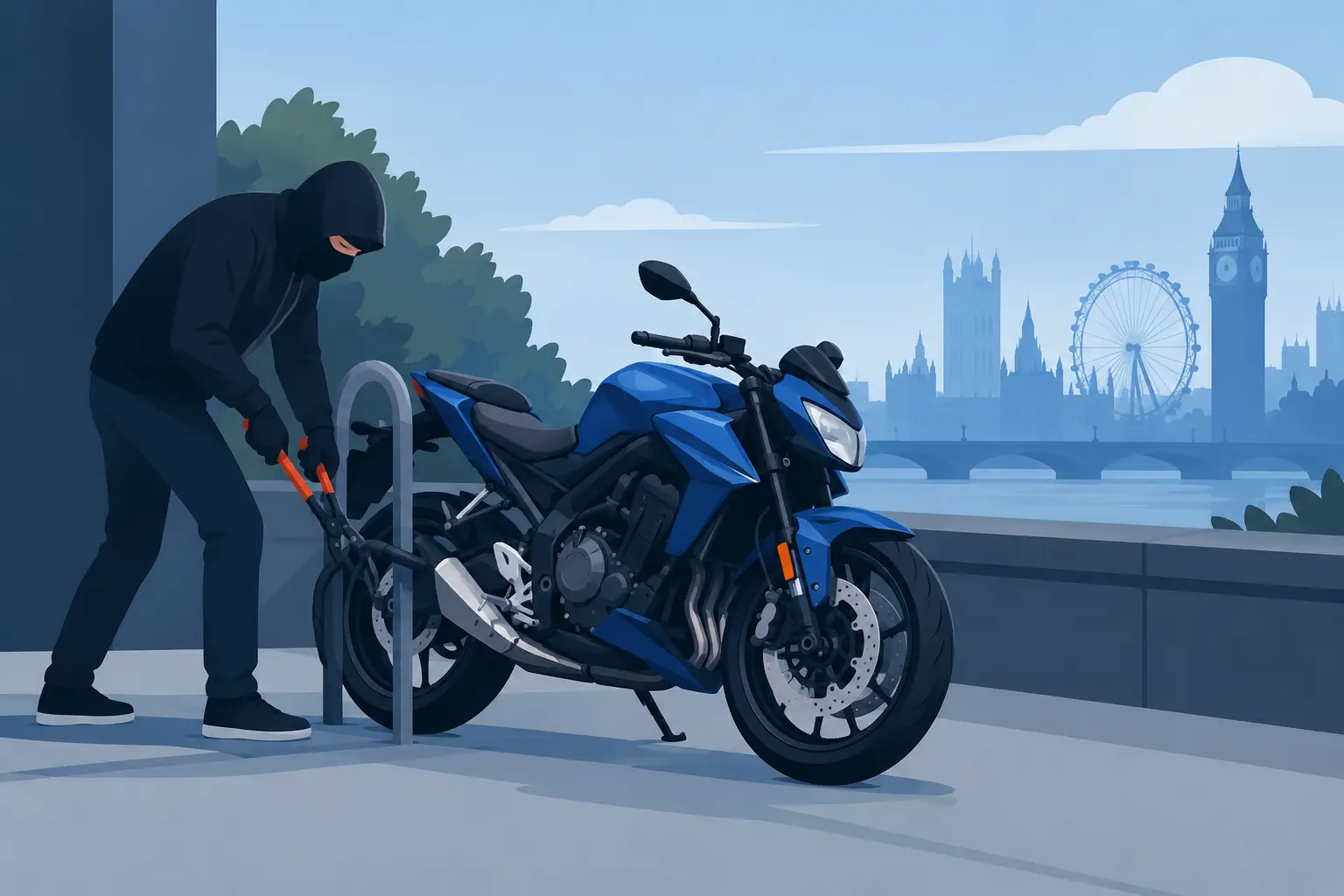
When parking away from home, use a busy, well-lit location where people are likely to notice unusual activity. Secure the motorcycle to street furniture designed for that purpose if available. Avoid attaching it to something that can be lifted over, dismantled or cut easily. A disc lock with an alarm can add a useful audible deterrent, but it should not be your only measure because the bike can still be lifted.
A cover is a simple extra layer. It conceals the model, makes casual inspection harder and forces a thief to spend more time at the scene. It is most effective alongside a chain, lock and sensible parking rather than in place of them.
Security needs to suit your routine
The strongest kit is useless if it stays in the shed because it is too heavy to carry. A commuter who parks on the road may need a portable chain and disc lock, while a weekend rider with secure home parking may prioritise a substantial ground anchor. If you use a top box or under-seat storage, consider whether your chosen lock can travel with you safely.
It also pays to practise using your security equipment. In poor weather or after a long shift, a fiddly chain can become tempting to skip. Choose equipment you can fit correctly every time.
The theft methods riders should plan around
The details of theft methods change, but most incidents fit a handful of patterns. Planning for them helps you spend money on protection that addresses a real weakness.
- Lift-and-load thefts rely on speed and manpower. A bike secured to a fixed object is harder to load than one protected only by a steering lock.
- Tool-assisted attacks target chains, padlocks and ignition systems. Buy recognised, properly rated equipment rather than the cheapest lock available.
- Keyless relay theft targets certain motorcycles with proximity keys. Store keys in a signal-blocking pouch at home and keep them away from entrances.
- Theft from garages and sheds takes advantage of weak doors, exposed hinges or poor lighting. Reinforce access points and fit an alarm or motion-sensitive lighting where appropriate.
Avoid sharing your exact storage arrangements, security routines or live location publicly. A photo of a new bike outside your home can reveal more than intended, particularly when combined with visible house numbers or distinctive landmarks.
How theft risk can affect motorbike insurance
Theft cover is generally included with comprehensive motorbike insurance, while third party fire and theft policies can also protect against theft. Third party only insurance does not cover the loss of your motorcycle if it is stolen. That distinction is worth checking before choosing solely on price.
Insurers ask where the bike is kept overnight because it is a meaningful indicator of risk. Be precise. “Locked garage”, “driveway”, “private car park” and “road” are not interchangeable. Giving an inaccurate answer might save money at quote stage, but it could create serious problems if you later need to make a claim.
Declared security can matter too. Some insurers may recognise approved locks, alarms, immobilisers or tracking systems, while others may have specific requirements or no discount at all. Do not assume a device will reduce your premium. Ask whether it needs to meet a particular standard, be professionally fitted or be active whenever the motorcycle is unattended.
A tracker can improve the chances of recovering a stolen bike, especially where police can act quickly on a live location. However, trackers normally involve purchase, fitting and sometimes a subscription. They can make most sense for high-value motorcycles or models with a known theft risk. For a lower-value commuter bike, the cost may outweigh any insurance saving, although the reassurance may still be worthwhile.
Excess and replacement value matter after a theft
Read the policy excess before you buy. A higher voluntary excess can lower the premium, but it means paying more towards a valid theft claim. That choice should be affordable if the worst happens, not just attractive on a quote screen.
Also check how your insurer will value the bike. Most policies settle based on market value at the time of loss, not necessarily what you paid, what you owe on finance or the cost of a brand-new replacement. Keep receipts for factory-approved accessories and declared modifications, as they may need to be included separately on the policy.
A practical theft-prevention routine
Building a routine is more effective than relying on one big purchase. Before leaving the bike, remove the key, engage the steering lock, fit a visible lock and secure it to an anchor where possible. At home, bring loose valuables indoors and avoid leaving helmets, documents or riding gear in boxes that are easy to open.
Keep a record of the registration number, VIN, engine number, mileage, service history and clear photographs of the motorcycle. Marking parts with a forensic marking system can also make resale harder and assist identification after recovery. These details can save valuable time when reporting a theft to the police and insurer.
If your bike is stolen, report it to the police promptly and obtain a crime reference number. Then contact your insurer as soon as you can. Do not try to recover the bike yourself if a tracker shows its location. Pass the information to the police and let them assess the situation.
Compare cover as carefully as you compare security
Motorcycle theft trends can feel unsettling, but they are a reason to be prepared rather than panic. The right combination of secure parking, visible protection and suitable insurance can reduce both your exposure and the disruption of a claim.
Before renewing, compare more than the headline premium. Check theft cover, excesses, storage details, approved security conditions and the level of support available if your bike disappears. With UKcompare, getting motorbike insurance quotes can help you weigh up cover and cost, because who compares wins. Then make locking up part of every ride – even when you are only away from the bike for a minute.